The 2006/07 Japan Home Shirt – The “Blade Pattern” Design
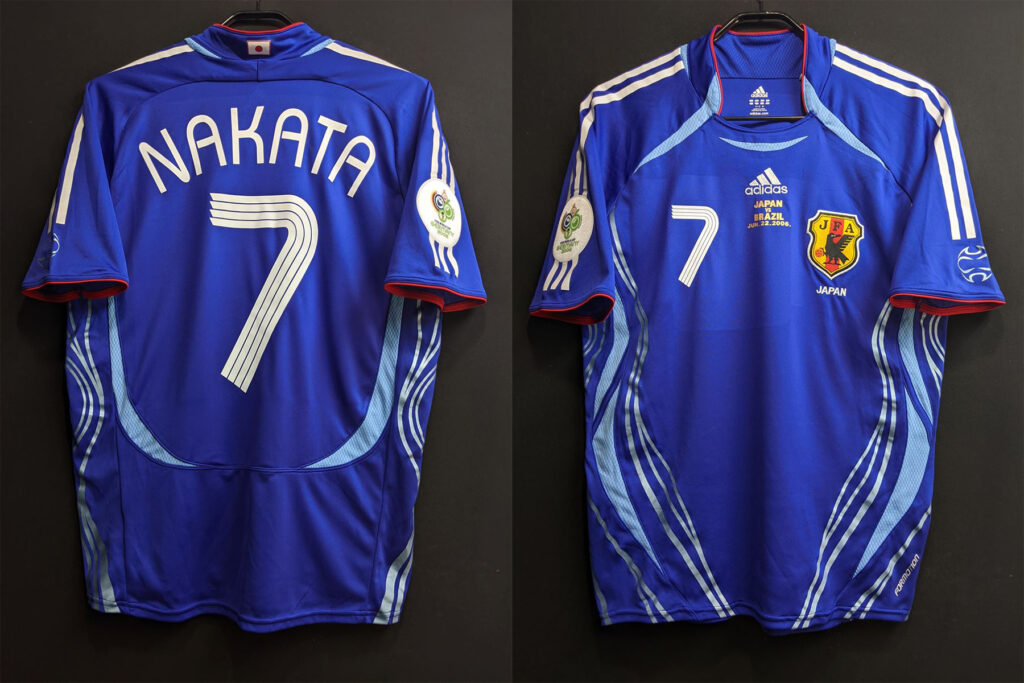
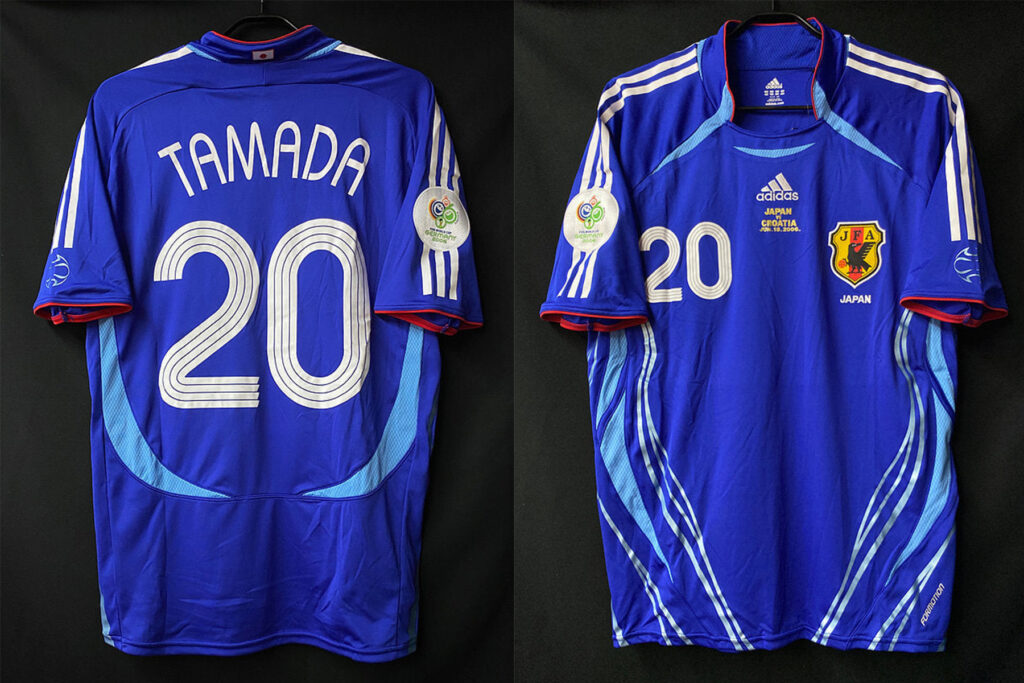
The 2006/07 Japan national team home shirt features a design inspired by the hamon, the distinctive temper pattern found along the edge of a traditional Japanese sword.
The concept reflects Japan’s team identity, “SAMURAI BLUE,” incorporating the Japanese sword as a symbol of the country’s traditional craftsmanship and technical heritage.
Flowing graphics run down both sides of the shirt, inspired by the wave-like patterns of a Japanese sword’s blade. The design also represents Japan, surrounded by the beautiful blue seas of the Pacific, spreading its wings and soaring towards the pale blue sky, symbolising the wider world.
The shirt features two shades of blue as its main colours, with red accents along the collar and sleeve cuffs. The combination creates a distinctive look that reflects the identity of the Japan national team while incorporating a uniquely Japanese design concept.
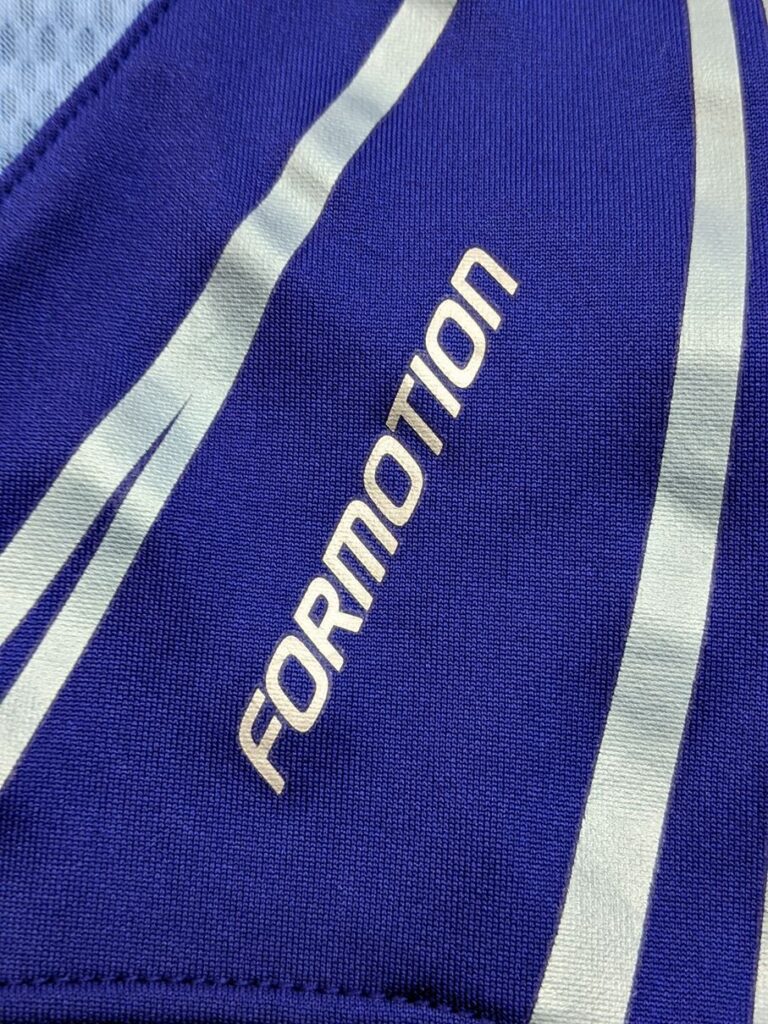
In terms of performance features, the Authentic Version incorporates adidas FORMOTION technology. The neckline also features a bonded construction without visible stitching, combining functional performance with a clean finish.
Japan wore this home shirt in all three of their group-stage matches at the 2006 FIFA World Cup in Germany. The final appearance came in their decisive match against Brazil.
2006 FIFA World Cup: Japan vs Brazil
June 22, 2006. Dortmund, Germany.
Japan faced Brazil in their final Group F match at FIFA World Cup Stadium Dortmund. It was a crucial game for Japan, who needed a victory to keep their hopes of reaching the knockout stage alive.
The stadium is now known as Signal Iduna Park, the home of Borussia Dortmund. Under FIFA tournament regulations, it was referred to as FIFA World Cup Stadium Dortmund during the competition. The venue hosted six matches at the 2006 World Cup, including the semi-final between Germany and Italy.
Managed by Zico, Japan entered the match with one draw and one defeat. To qualify for the knockout stage, they needed to beat Brazil by at least two goals.
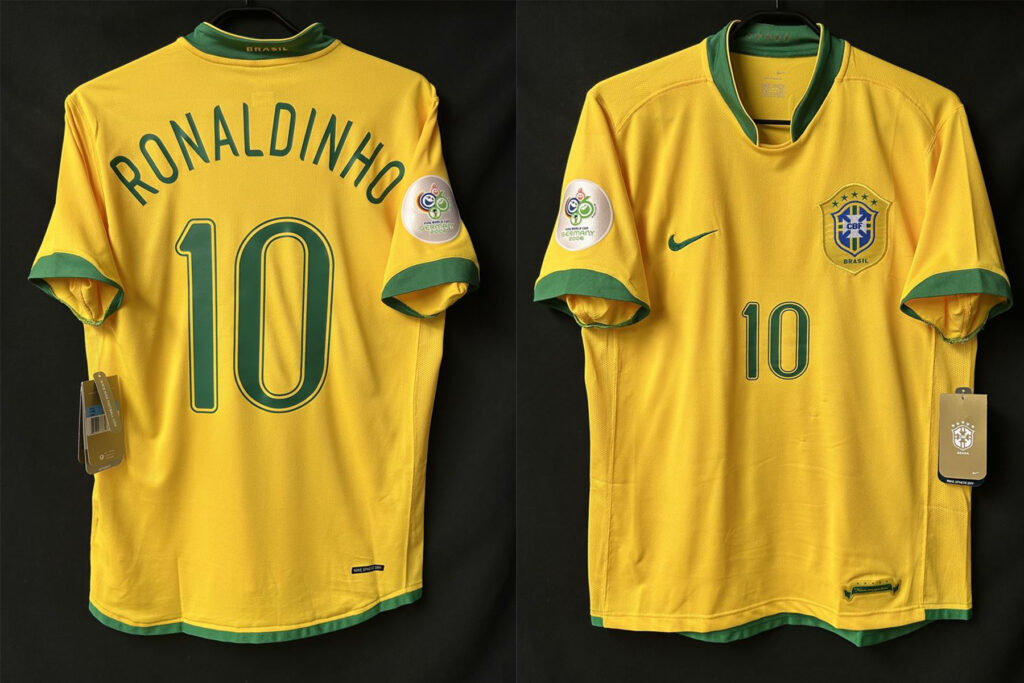
Brazil, meanwhile, were the reigning world champions, having won the 2002 FIFA World Cup in Japan and South Korea. Their squad featured some of the biggest names in world football, including Ronaldo, Ronaldinho, Kaká and Adriano.
Japan made a dream start in the 34th minute. Keiji Tamada met a pass and struck a superb first-time volley past Brazilian goalkeeper Dida to give Japan the lead.
However, Ronaldo equalised just before half-time. Brazil took control after the break, with Juninho Pernambucano scoring in the 53rd minute and Gilberto adding another goal in the 59th. Ronaldo completed the scoring with his second goal of the match in the 81st minute.
Japan suffered a 4–1 defeat and finished the group stage with one draw and two losses, bringing their World Cup campaign to an end.
For Hidetoshi Nakata, however, this match marked the end of his playing career.
Hidetoshi Nakata’s Retirement from Football
When the final whistle sounded, Hidetoshi Nakata lay on his back on the pitch and remained there for some time without moving.
Despite the demanding match against the reigning world champions, Nakata had continued running and fighting until the very end. He had been one of Japan’s key players throughout the game.
Those who came to console him on the pitch reportedly included captain Tsuneyasu Miyamoto, members of the team staff and Brazilian forward Adriano, who had been Nakata’s teammate at Parma in Italy.
Ten days after the match against Brazil, on July 3, 2006, Nakata announced his retirement from professional football through his official website.
He was just 29 years old. Having represented Japan at three consecutive FIFA World Cups – France 1998, Korea/Japan 2002 and Germany 2006 – his retirement came as a surprise to football fans around the world.
Nakata later explained his decision, saying that injuries had nothing to do with it. He simply felt that he was no longer enjoying playing football.
Having played in both Italy’s Serie A and the English Premier League, Nakata was one of the pioneers who helped open the door for Japanese footballers to play in Europe. His career came to an end with that final appearance against Brazil in Dortmund.
The 2006/07 Japan Home Shirt Featuring Nakata’s Number 7
Japan wore the “Blade Pattern” home shirt throughout all three of their group-stage matches at the 2006 FIFA World Cup.
Among those appearances, the shirt worn by Hidetoshi Nakata against Brazil, featuring his number 7, holds particular significance.
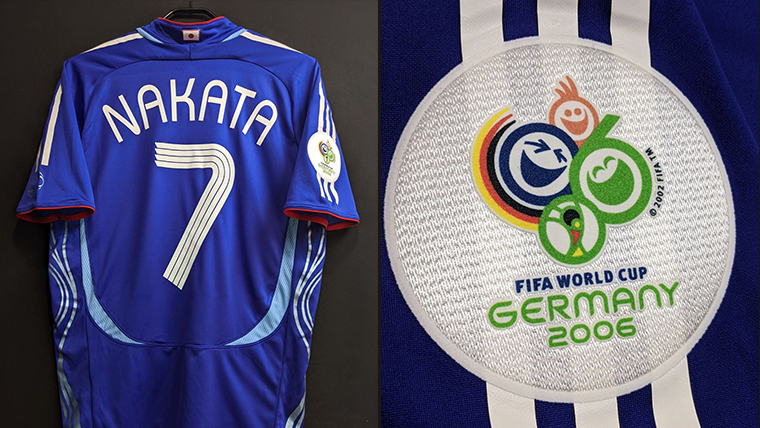
The shirt featured here has Nakata’s name and number 7 on the back, along with the official 2006 FIFA World Cup sleeve patch and match-specific printing.
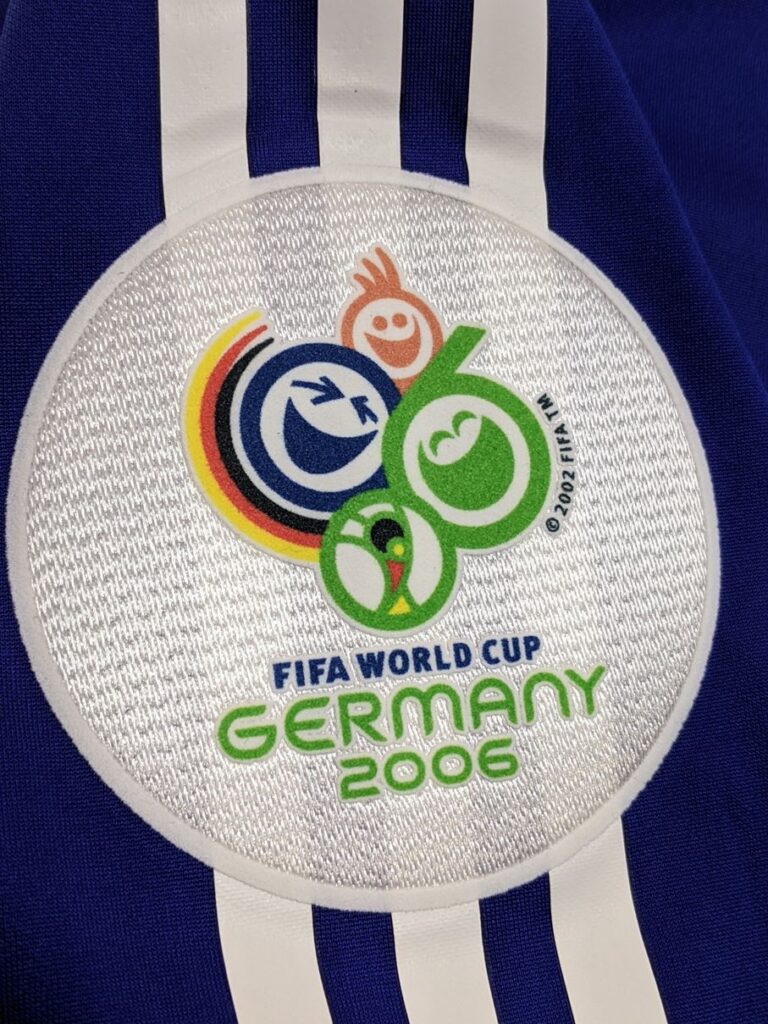
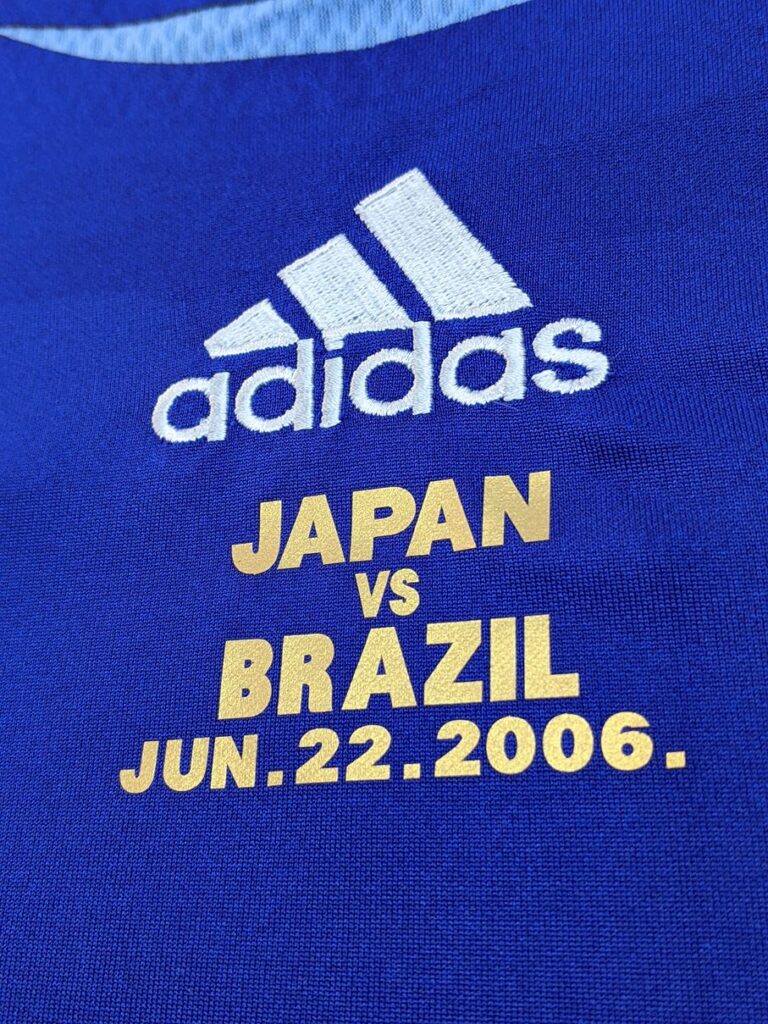
June 22, 2006, in Dortmund. It was the night Japan’s World Cup campaign came to an end, and it also marked the final match of Hidetoshi Nakata’s professional career.
The blue shirt inspired by the blade pattern of a Japanese sword, combined with Nakata’s number 7, brings together two defining elements of that night in Dortmund: Japan’s 2006 World Cup campaign and the final appearance of one of the most influential Japanese footballers of his generation.