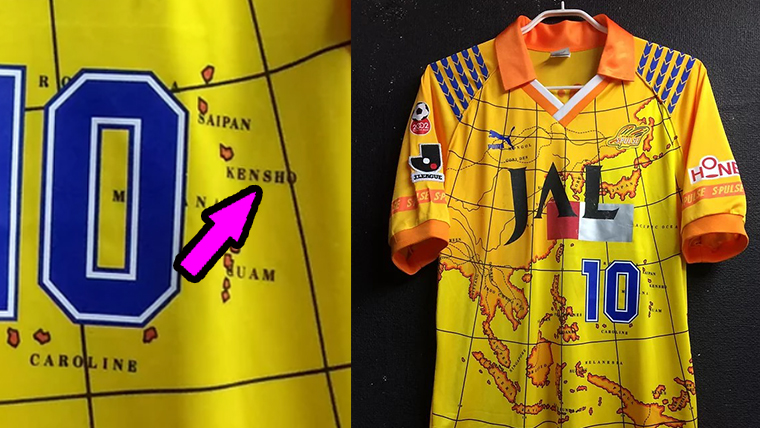
A Legendary Shimizu S-Pulse Shirt from the Early J.League Era
When talking about football shirts from the early days of the J.League, Shimizu S-Pulse is a particularly fascinating club.
Based in Shizuoka Prefecture, an area known as “the Kingdom of Football” in Japan, Shimizu S-Pulse was one of the Original 10 clubs that joined the J.League when it launched in 1993.
Among the club’s early shirts, one of the most famous is the iconic shirt featuring a world map.
At first glance, it simply looks like a shirt covered with a world map.
But look closely, and you can find a mysterious name hidden within the map.
That name is:
“KENSHO”
The World Map Shirt
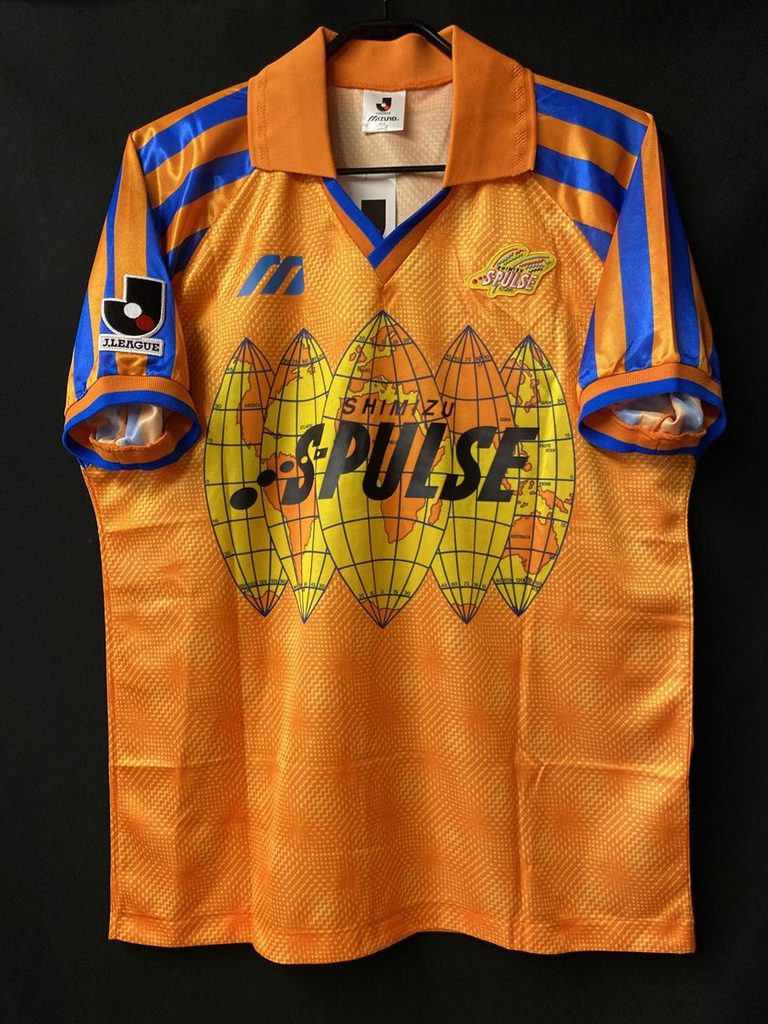
This shirt was Shimizu S-Pulse’s first home shirt for J.League league matches.
It was used from 1993 through 1996.
Its most distinctive feature is the world map covering the entire shirt.
The map was more than just decoration.
At the time, Shimizu S-Pulse had the airline company JAL (Japan Airlines) as its main chest sponsor.
The club also had an image of being a “club reaching out to the world.”
The world map was therefore chosen as a design representing the club’s ambitions and its connection with the rest of the world.
In the early J.League, which had only just launched in 1993, a shirt featuring such a bold world map was an exceptionally distinctive design.
Designed by Japanese Fashion Designer Kensho Abe
The shirt was designed by Japanese fashion designer Kensho Abe.
Abe was responsible for Shimizu S-Pulse’s shirt designs from the club’s foundation in 1992 through 2006.
He also worked on other major sportswear projects, including the uniforms worn by the Japanese delegation at the 2000 Sydney Olympics.
Among Shimizu S-Pulse’s historical shirts, the early designs created by Abe remain particularly popular with collectors.
And there was a small hidden detail in his world map design.
“KENSHO” Is Hidden in the World Map!
If you take a closer look at the first-ever Shimizu S-Pulse home shirt for J.League league matches introduced above…
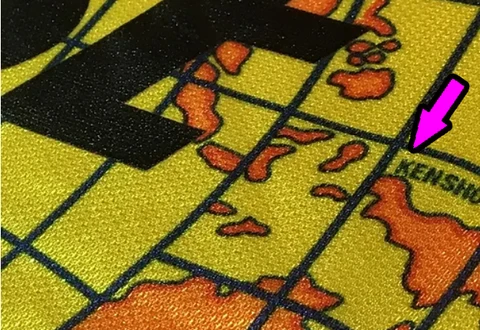
It is:
KENSHO
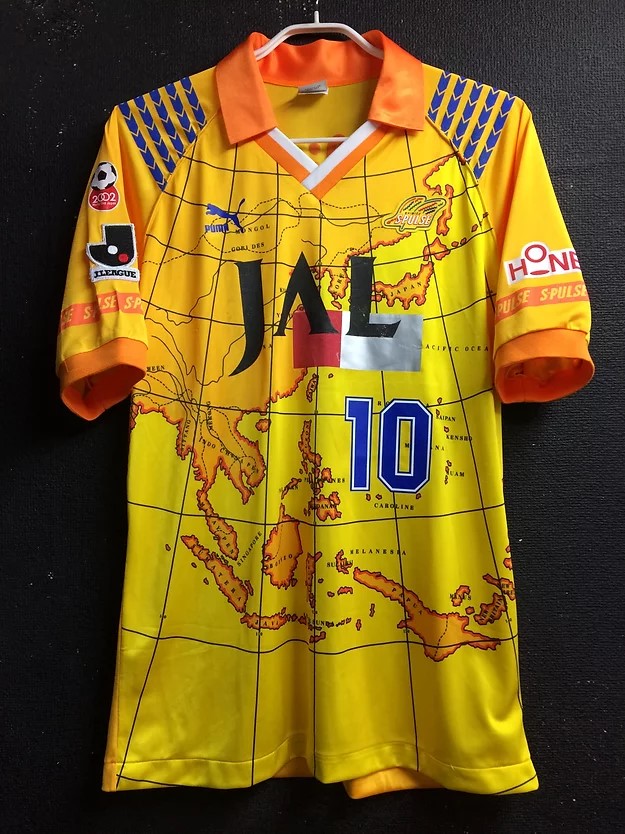
On the 1992–96 home shirt used for cup competitions, look closely at the area between Saipan (SAIPAN) and Guam (GUAM)…
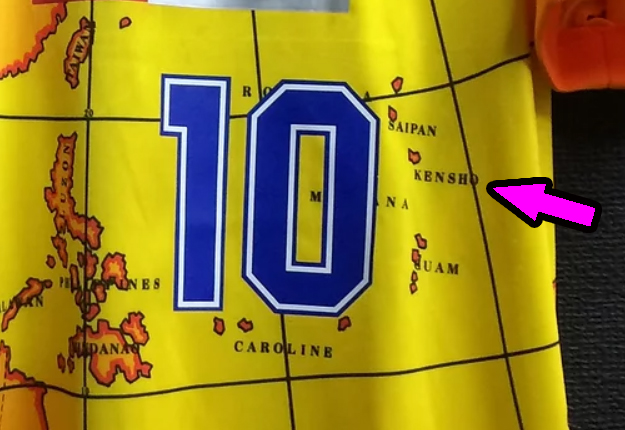
It is:
KENSHO
The 1999–2001 away shirt also contains the same hidden name.
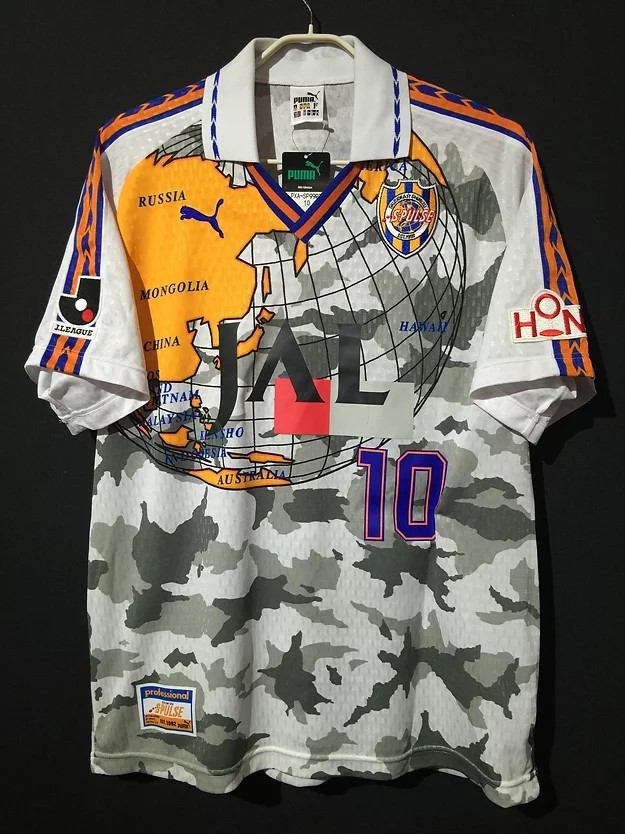
Take a close look…
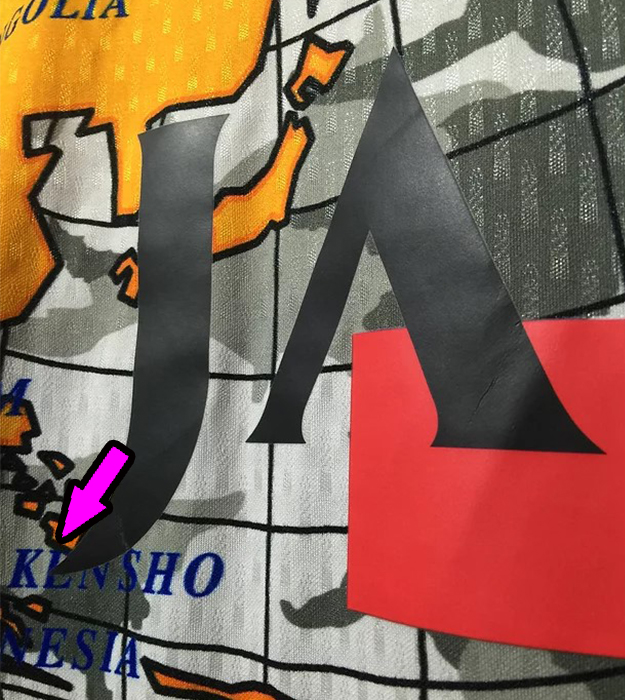
It is:
KENSHO
And even the fourth-generation Shimizu S-Pulse world map shirt has it hidden within the design.
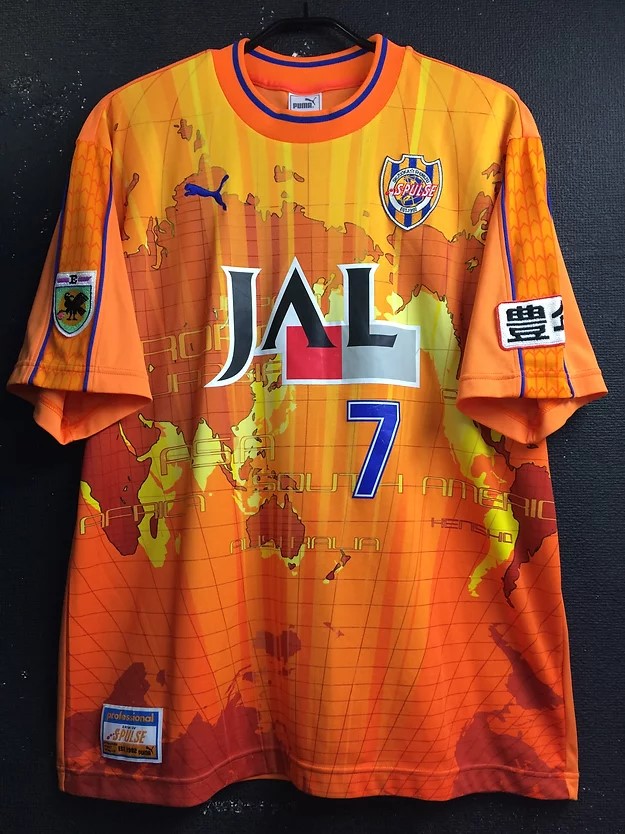
Look closely…
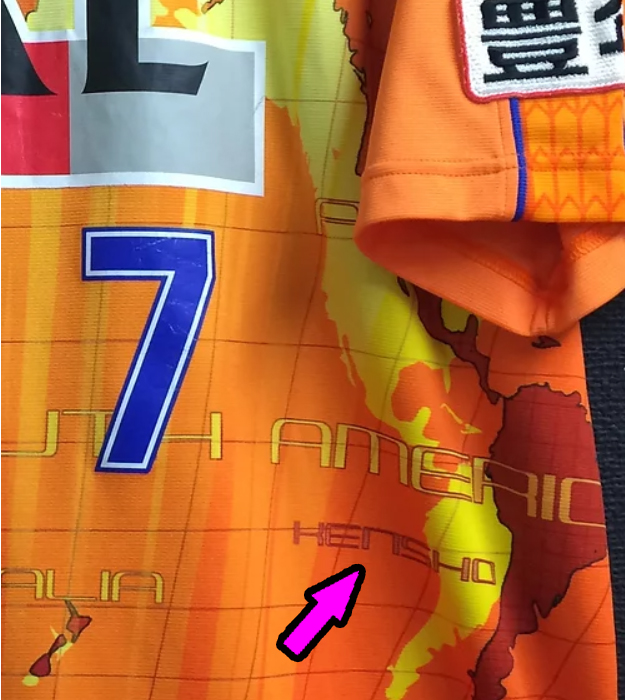
It is:
KENSHO
“KENSHO” Appears on Multiple Shimizu S-Pulse Shirts
Interestingly, “KENSHO” appears on multiple Shimizu S-Pulse shirts, rather than just one particular design.
The hidden name can be found on several of the club’s world map and globe-inspired shirts designed by Kensho Abe.
It was not simply a one-time detail. Instead, it appears to have become a kind of hidden signature incorporated into Abe’s designs.
For football shirt collectors, discovering details like this is one of the great pleasures of collecting vintage shirts.
From a distance, these shirts may simply look like distinctive world map designs.
But once you know where to look, you can find the designer’s name hidden within them.
Different Shirt Suppliers for League and Cup Matches
There is another fascinating feature of Shimizu S-Pulse’s early shirts.
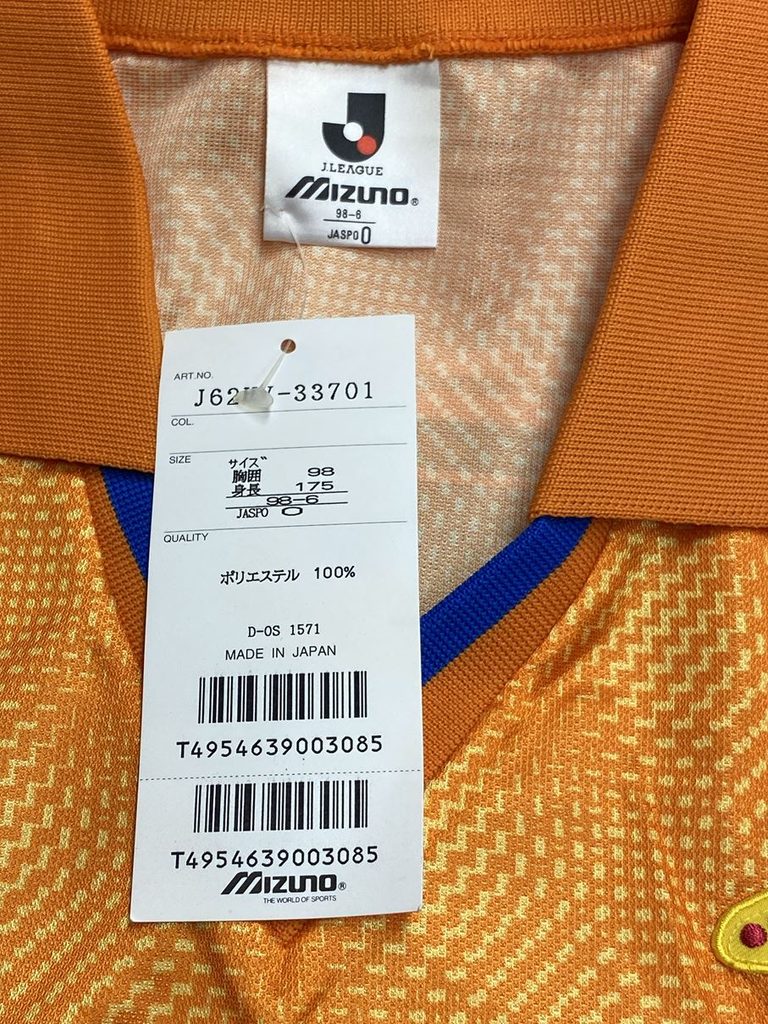
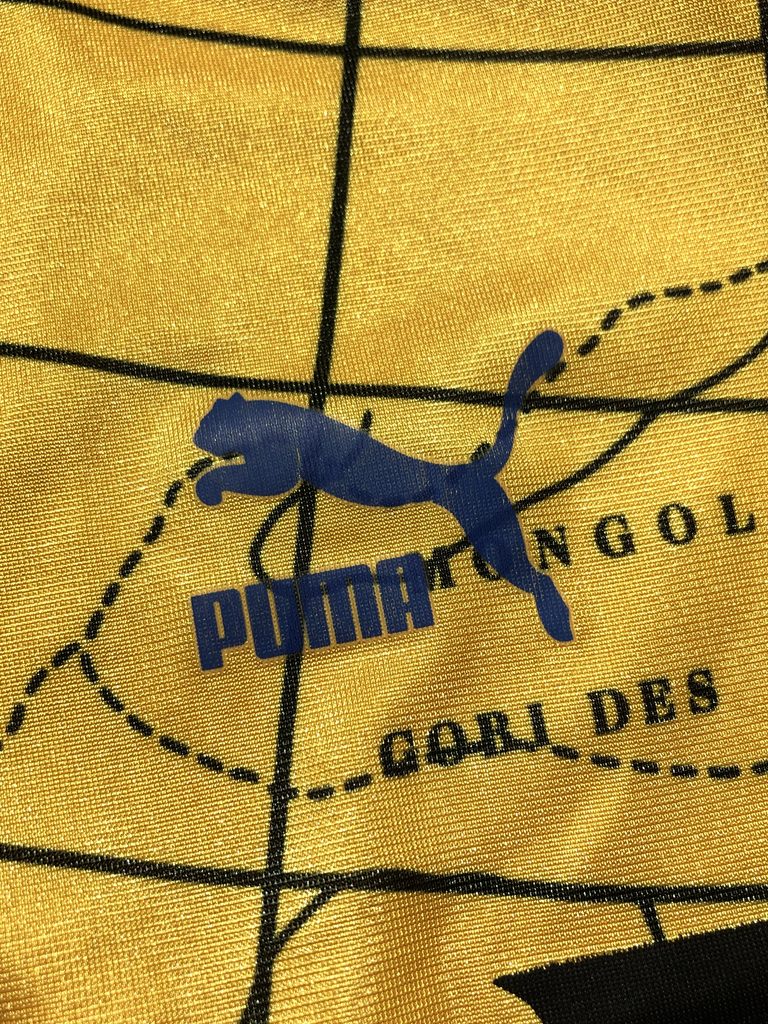
The club used different shirt suppliers for league and cup competitions.
The league shirt was made by Mizuno.
The cup shirt, on the other hand, was made by PUMA.
This was a distinctive feature of the early J.League era.
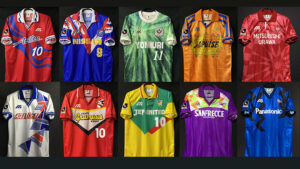
For the first four seasons after the J.League launched in 1993, Mizuno supplied shirts to all J.League clubs.
As a result, many clubs used shirts from different suppliers for cup competitions.
Unlike today, the same club could wear shirts with different suppliers and designs depending on the competition.
For vintage football shirt collectors, this is another fascinating aspect of early J.League shirts.
Why Is This Shirt So Special?
Shimizu S-Pulse’s world map shirt is special for much more than its eye-catching design.
It captures the atmosphere of Japanese football at a time when the J.League had only just begun.
In 1993, the J.League was born.
Japanese clubs were beginning to establish their own identities and distinctive visual styles.
Shimizu S-Pulse expressed that identity through a world map.
The shirt brings together several elements:
- JAL as the main sponsor
- The club’s ambition to reach out to the world
- The distinctive design of Kensho Abe
- The hidden “KENSHO” inside the world map
Together, these elements make the shirt much more than simply an interesting piece of sportswear.
The World Map Became Part of Shimizu S-Pulse’s Identity
Abe’s world map design came to an end in 2006.
However, the idea itself did not completely disappear.
In 2012, Shimizu S-Pulse once again introduced a shirt inspired by a world map.
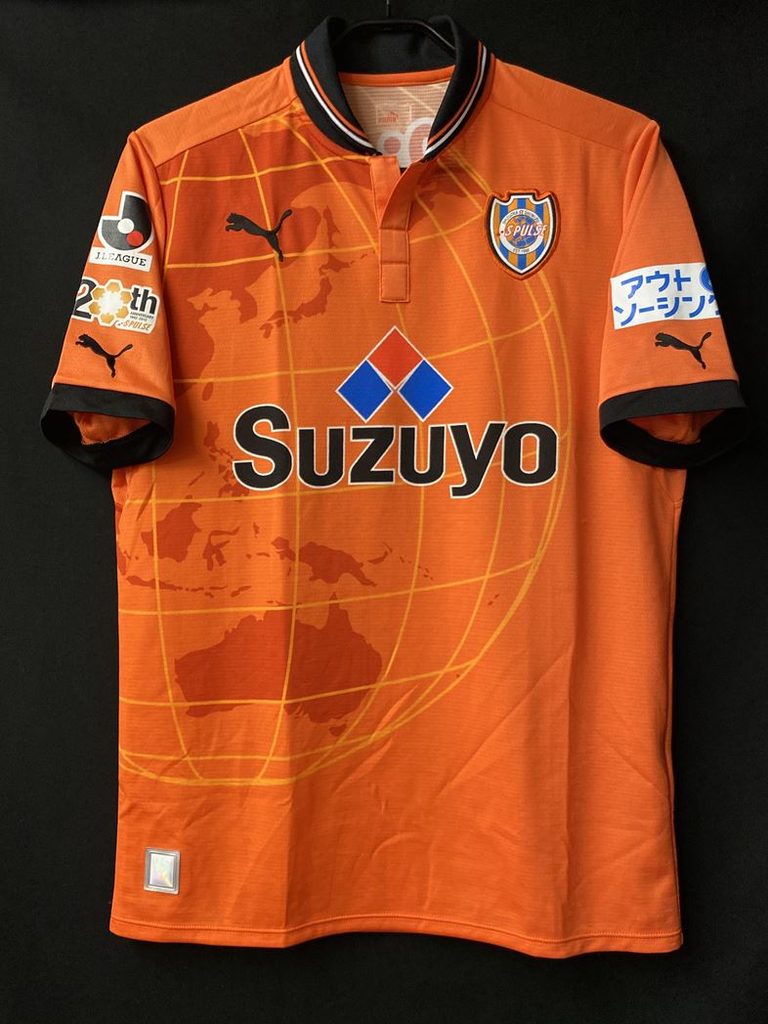
This later shirt did not feature “KENSHO,” but it once again used imagery inspired by maps and the globe.
This shows how closely the world map concept had become connected to Shimizu S-Pulse’s history and identity.
A Fascinating Shirt More Than 30 Years Later
One of the great things about vintage football shirts is discovering secrets that only become apparent when you look closely.
The hidden “KENSHO” in Shimizu S-Pulse’s world map shirt is a perfect example.
The world map represented Shimizu S-Pulse’s ambition to reach out to the world.
The JAL sponsorship was a natural fit for that concept.
And hidden within the map was the name of the designer himself.
Once you know about “KENSHO,” the shirt suddenly looks completely different.
More than 30 years after the birth of the J.League, this is the kind of story that continues to fascinate collectors.
Shimizu S-Pulse’s world map shirt is one of the standout pieces in the history of Japanese football shirts and a true representation of the creative spirit of the early J.League.