When talking about Japan’s national team shirts of the 1990s, few designs are as distinctive as the “Flame Model.”
Used from around 1996 to 1998, the design is best known for the “Miracle of Johor Bahru” in 1997 and Japan’s 1998 FIFA World Cup debut in France.
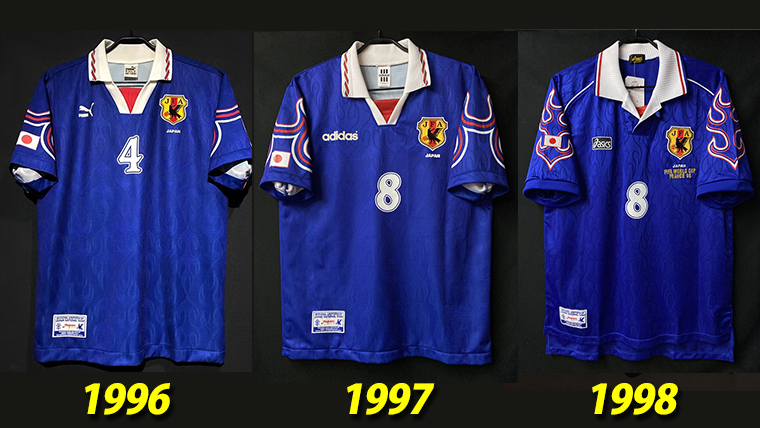
However, what makes the Flame Model particularly interesting to collectors is that what is often considered a single design actually existed in multiple versions by PUMA, adidas and asics.
Between 1996 and 1998, Japan wore shirts based on the same “flame” concept, but with different suppliers and specifications.
These three years also marked an important period when Japanese football began to open the door to the world stage.
What Was the Flame Model?
The defining feature of the Flame Model is the flame graphic across both sleeves.
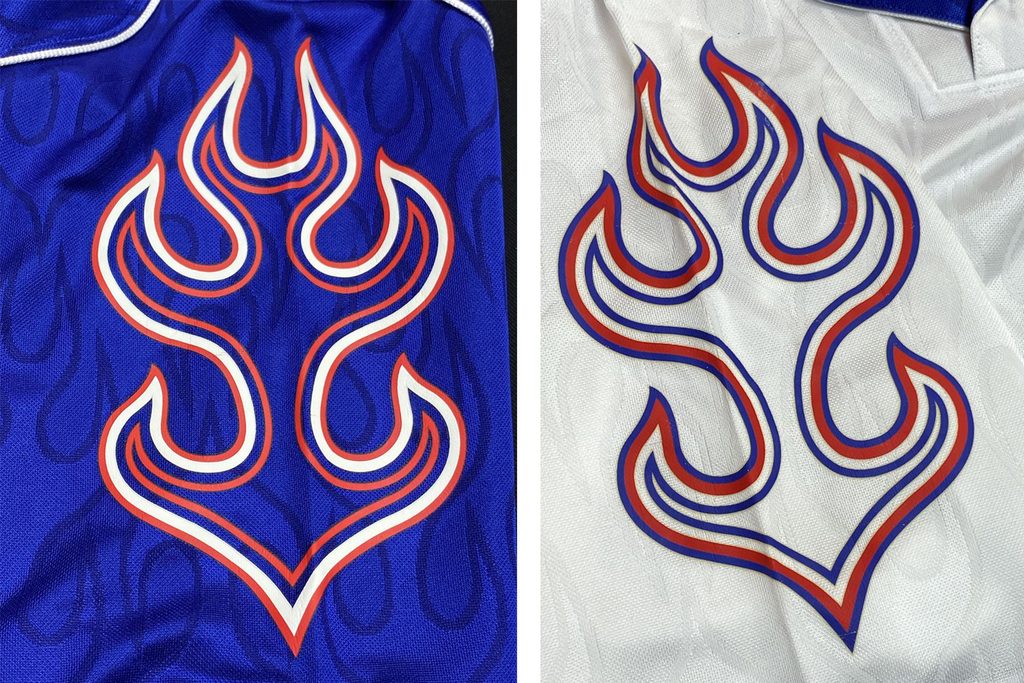
The flames are said to have been inspired by Karura-en, the sacred flames associated with Fudō Myō-ō, a Buddhist deity deeply connected to Japanese religious culture.
According to JFA materials, the concept of the 1998 FIFA World Cup model was described as “Burning Flames,” with the flame design appearing not only on the shirt but also on the shorts.
The combination of Japan’s traditional blue base color and the bold flame graphics created a striking design that stood out at the time.
Different Suppliers and Specifications Across Three Years
One of the most interesting aspects of the Flame Model is that the supplier changed in each of the three years: 1996, 1997 and 1998.
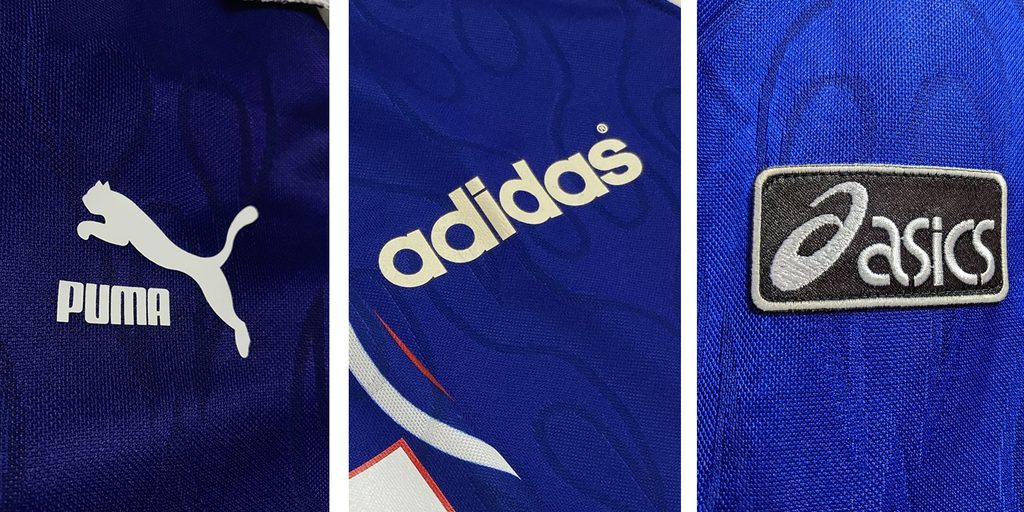
1996
- Supplier: PUMA
- Key Feature: The original “Flame” design
- Major Event: Asian Cup
1997
- Supplier: adidas
- Key Feature: Flame concept continued, with larger sleeve flames
- Major Event: World Cup qualifiers, “Miracle of Johor Bahru”
1998
- Supplier: asics
- Key Feature: Slightly smaller sleeve flames
- Major Event: France 1998 World Cup, Japan’s World Cup debut
From 1996 to 1998, Japan was not in an era when adidas supplied all of the national team’s shirts as it does today.
Instead, PUMA, adidas and asics supplied different age groups and national team categories. adidas became the JFA’s official supplier from 1999.
Looking closely at the shirts known as the Flame Model reveals the differences between the three suppliers, even though they shared the same overall concept.
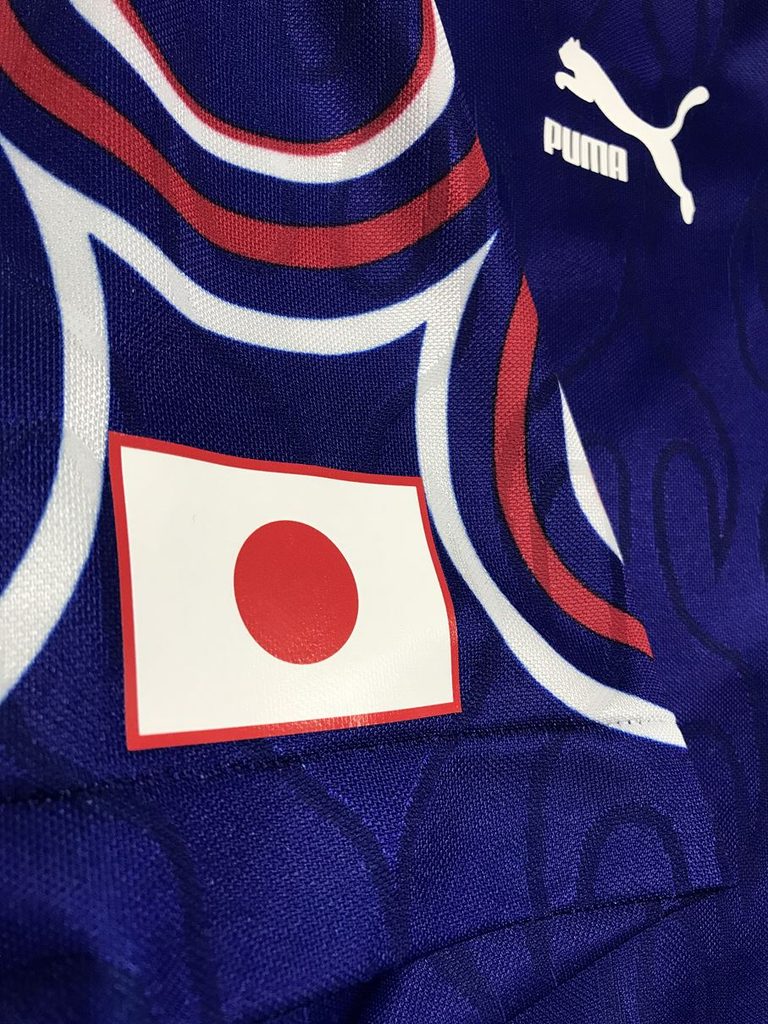
① 1996 PUMA Model — The Original Flame
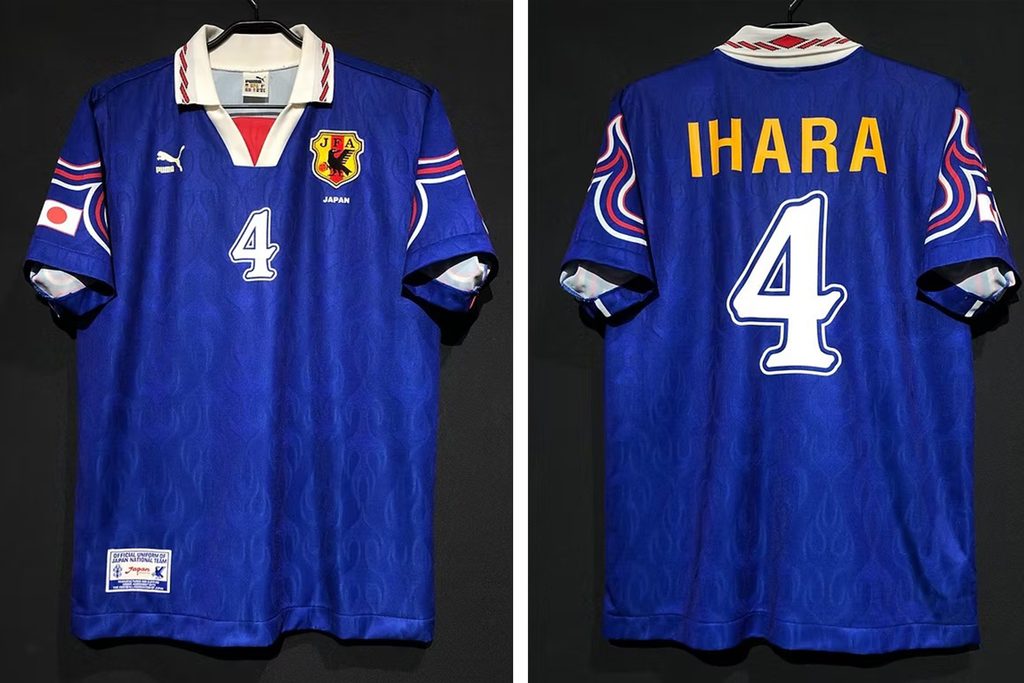
The 1996 PUMA model was the original version of the Flame Model.
The senior national team began wearing it in May 1996, starting with the Kirin Cup match against Yugoslavia.
Japan’s U-23 team also wore this Flame Model at the Atlanta Olympics that same year.
(The supplier of Japan’s U-23 national team at the Atlanta Olympics was asics.)
The most famous match of the tournament came on July 22 against Brazil.
In what became known as the “Miracle of Miami,” Japan defeated Brazil 1-0.
The shirt Japan wore when it achieved this historic victory over one of the world’s strongest teams was the original Flame Model.
For this reason, the shirt is more than simply a Japan national team shirt from the 1990s.
It is also a symbol of the period when Japanese football began making its presence felt on the world stage.
② 1997 adidas Model — The Flame of the “Miracle of Johor Bahru”
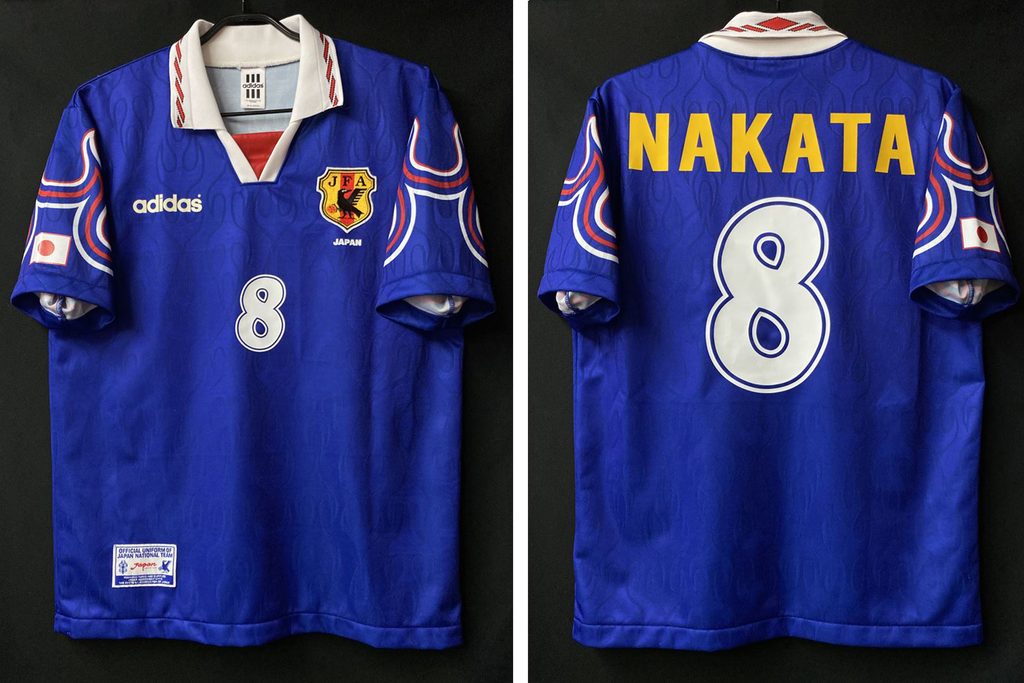
The 1997 model is probably the most iconic version of the Flame Model among collectors.
It was worn during the 1997 Asian qualifying campaign for the FIFA World Cup, including Japan’s match against Iran on November 16, 1997, the Asian third-place playoff held in Johor Bahru, Malaysia.
The match went into extra time.
Japan 3-2 Iran
Japan secured its first-ever World Cup qualification with Masayuki Okano’s golden goal.
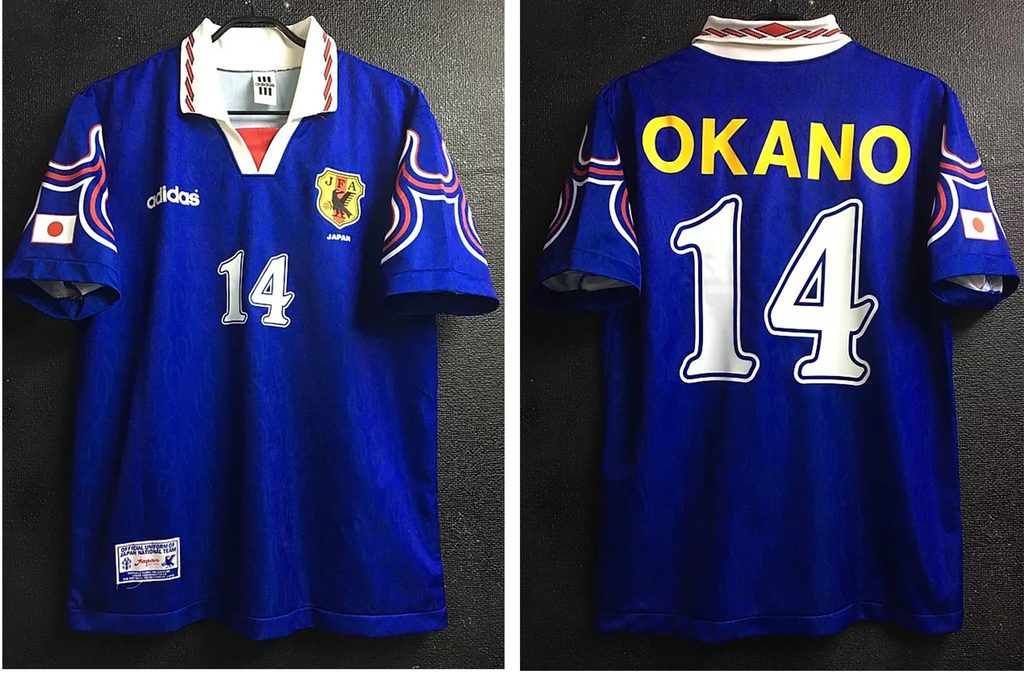
Because Japan wore this shirt in that historic match, the 1997 model is still sometimes referred to as the “Johor Bahru Model.”
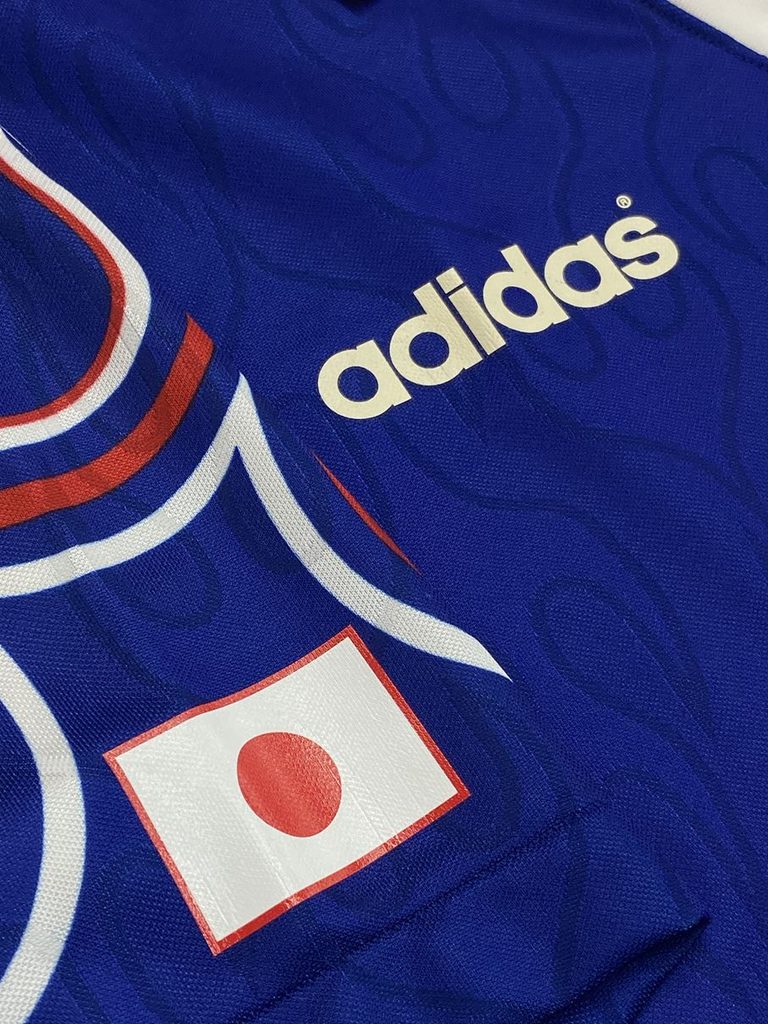
The 1997 version retained the same flame concept as the 1996 model, but the supplier changed to adidas.
The most noticeable difference is the larger flame graphic on the sleeves compared with the 1996 version.
③ 1998 asics Model — Japan’s First World Cup Shirt
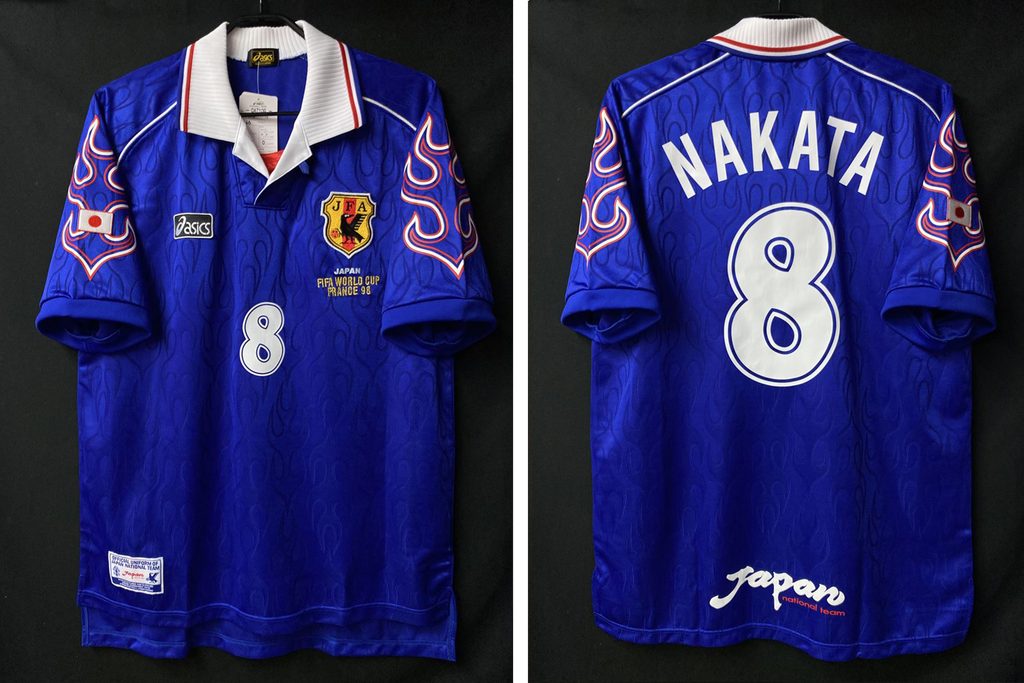
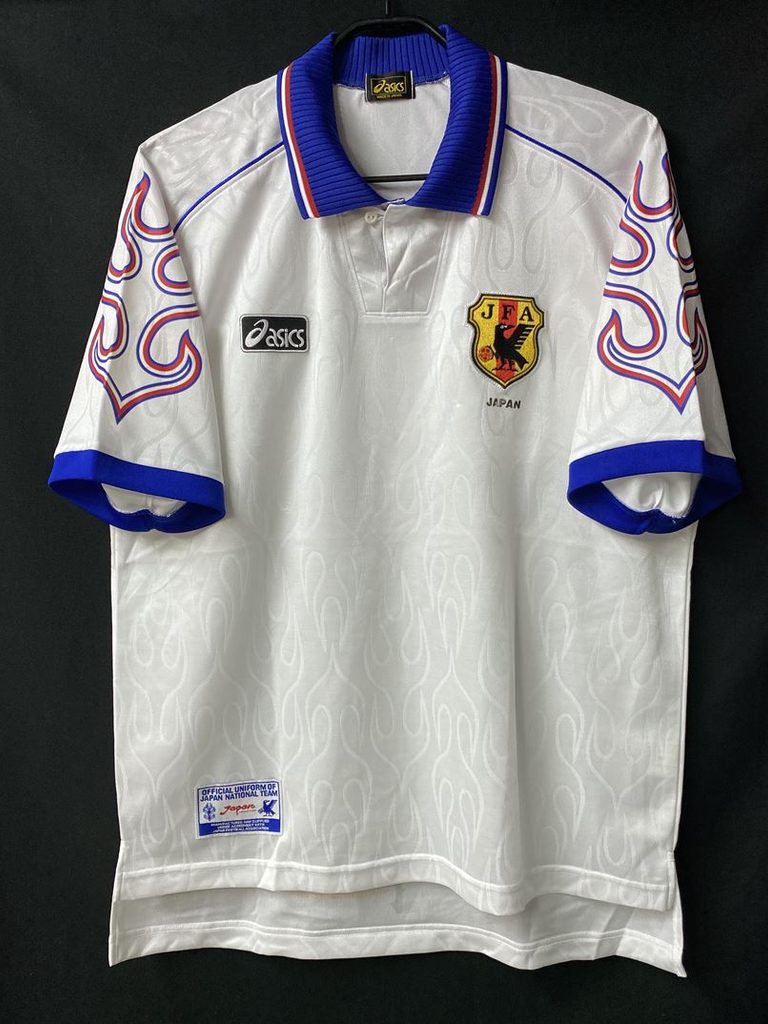
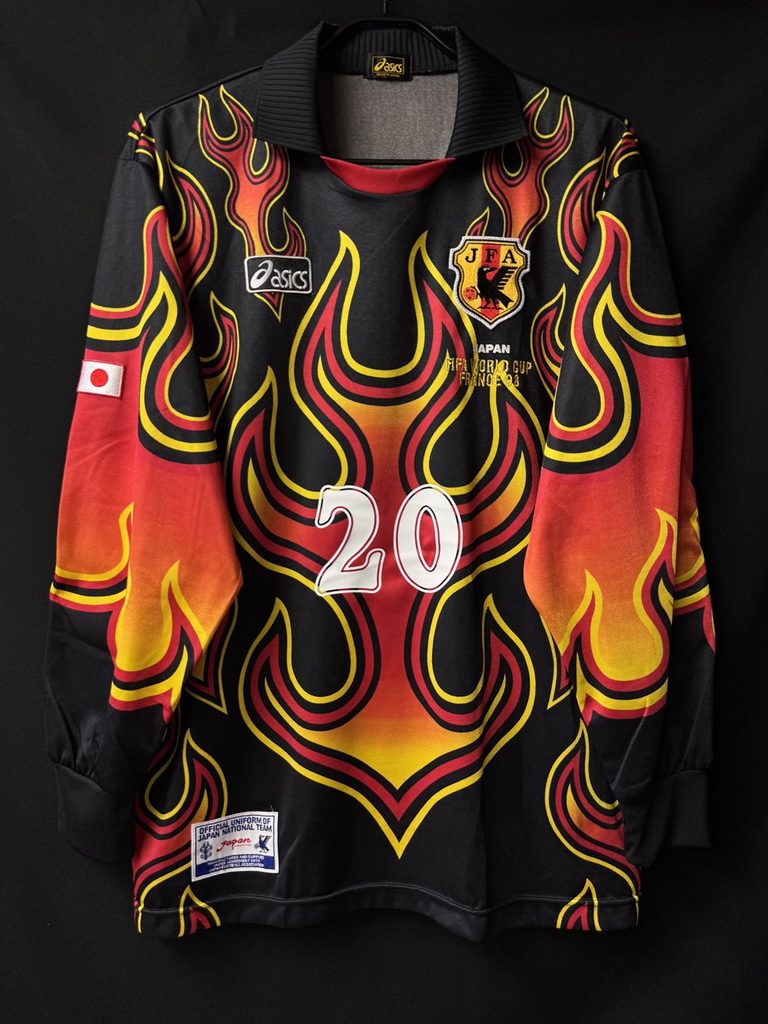
The most widely recognized version is the one actually worn by Japan at the 1998 FIFA World Cup in France.
The supplier for this model was asics.
While it retained the basic design of the 1997 model, the most obvious difference was that the sleeve flames were slightly smaller.
Below the crest on the left chest, the shirt also featured the text:
“FIFA WORLD CUP FRANCE 98”
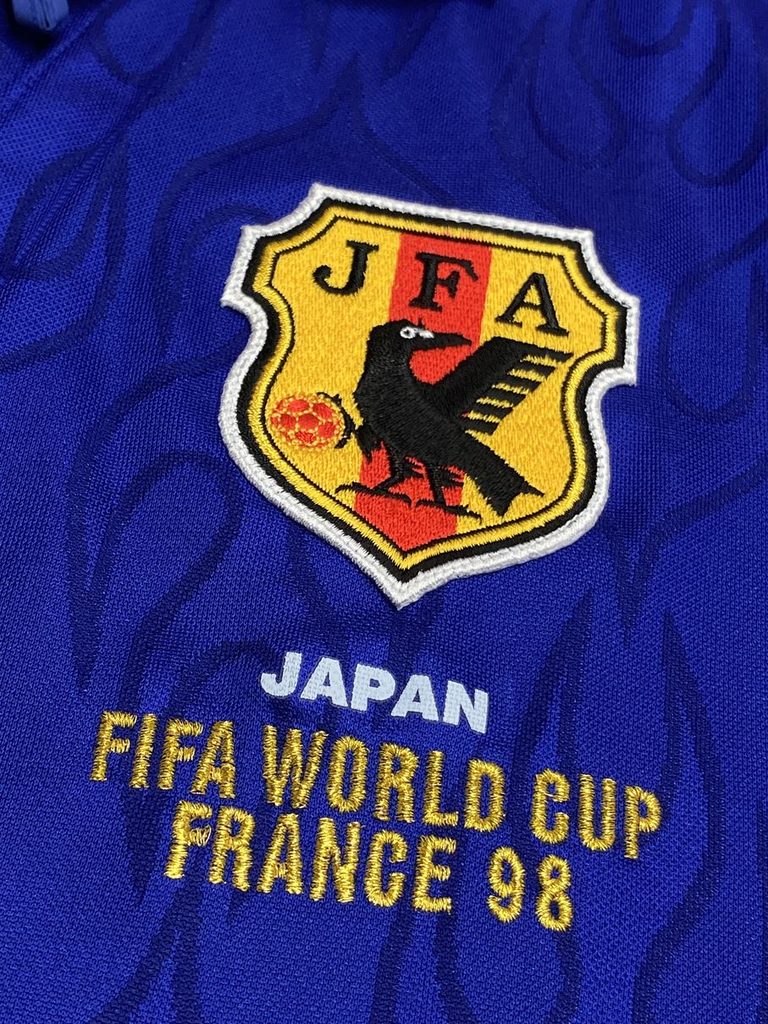
This was the first World Cup shirt in Japan’s national team history, worn by players including Hidetoshi Nakata, Hiroshi Nanami, Masashi Nakayama, Yutaka Akita, Masami Ihara and Naoki Soma.
Japan played three matches at the 1998 World Cup:
- Argentina 1-0 Japan
- Croatia 1-0 Japan
- Jamaica 2-1 Japan
Japan lost all three matches, but simply reaching the World Cup for the first time was already a historic moment for Japanese football.
How to Distinguish the 1996, 1997 and 1998 Versions
The three Flame Models look similar at first glance, but several details can help identify them.
- Supplier: PUMA in 1996, adidas in 1997, and asics in 1998
- Sleeve flames: The 1997 adidas version has larger flames, while the 1998 asics version has slightly smaller flames
- Shoulder flames: The 1996 and 1997 versions use sublimated graphics
- World Cup specification: The model worn at the 1998 FIFA World Cup features embroidered “FIFA WORLD CUP FRANCE 98” lettering
In other words, “Flame Model” does not automatically mean “1998 World Cup.”
The same flame design was developed across three years by different suppliers: PUMA in 1996, adidas in 1997 and asics in 1998.
Knowing these differences makes it much easier to identify the era and specifications of a vintage Japan national team shirt.
Why Is This Shirt So Special?
The period from 1996 to 1998 was a major turning point in the history of Japanese football.
1996
→ Japan defeated Brazil at the Atlanta Olympics
1997
→ World Cup Asian qualifying campaign
→ Fierce battles against South Korea, the UAE and Iran
→ Japan secured its first World Cup qualification in Johor Bahru
1998
→ Japan made its World Cup debut in France
In just three years, Japan faced some of the world’s strongest teams, secured its first-ever World Cup qualification, and finally stepped onto the World Cup stage.
That is why the Flame Model is more than simply a popular design from the 1990s.
It symbolizes the era when Japan transformed from a country that had never qualified for the World Cup into a country that had finally reached the tournament.
Incidentally, in 2017, adidas released a modernized commemorative shirt based on the 1997 model.
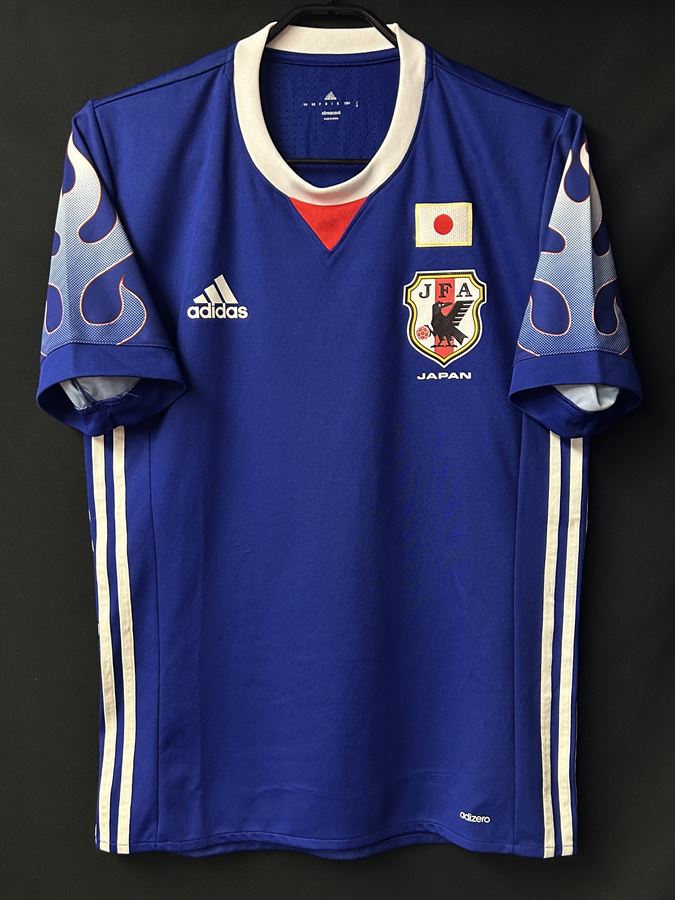
(20th Anniversary of Japan’s World Cup Qualification)
Because it closely resembles the original 1997 version, collectors of vintage Japan national team shirts should take care not to confuse the commemorative release with the original.