What Was the ‘Tragedy of Doha’?
October 28, 1993.
There is one day that can never be forgotten when looking back at the history of Japanese football.
It was the final match of the Asian qualifying round for the 1994 FIFA World Cup in the Qatari capital of Doha, where Japan faced Iraq.
Japan knew that a victory would secure its first-ever appearance at the 1994 World Cup in the United States.
However, Iraq scored a late equalizer.
The match ended 2-2, and Japan missed out on qualification for the World Cup.
The heartbreaking result would later become known in Japan as the “Tragedy of Doha.”
For the Japan national team, it was an enormous disappointment.
But the defeat did not mark the end of Japanese football.
In fact, experiencing the “Tragedy of Doha” became one of the major turning points that helped Japanese football continue to develop and grow.
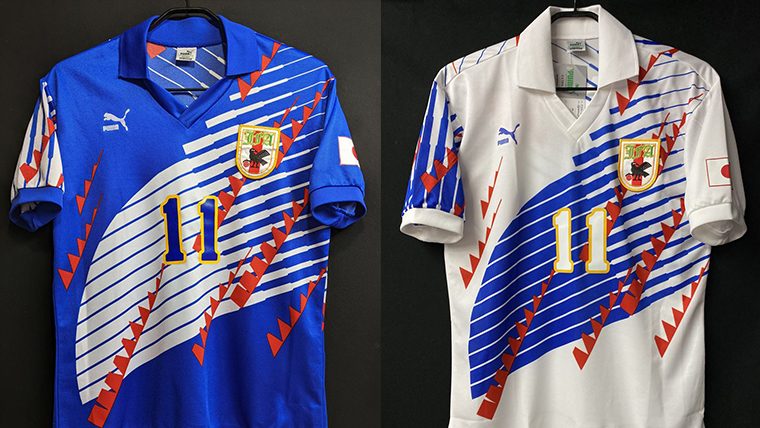
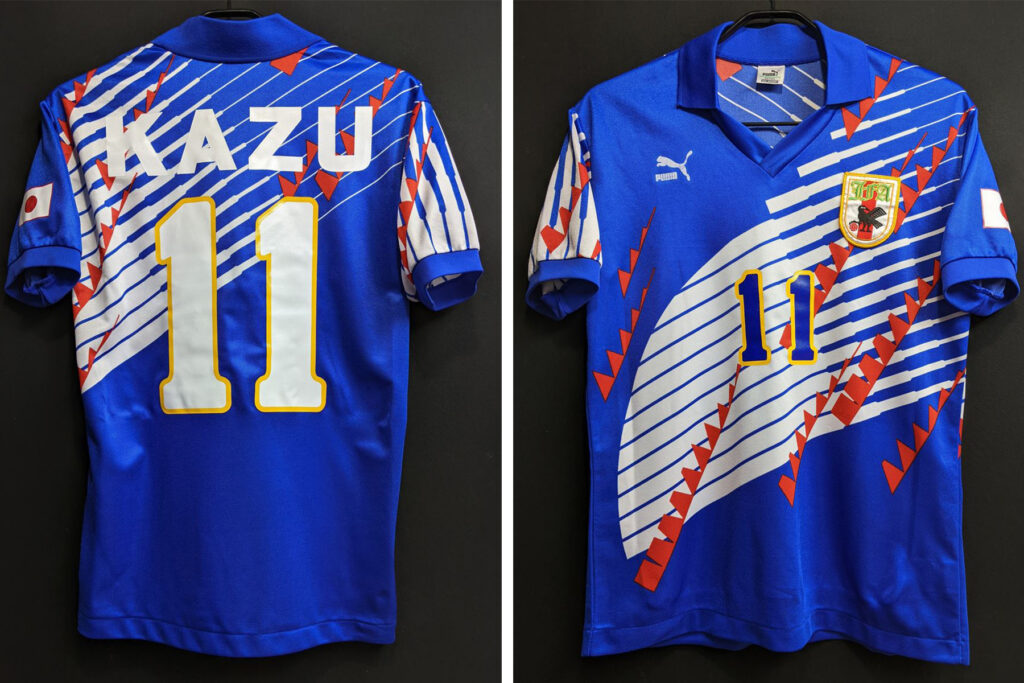
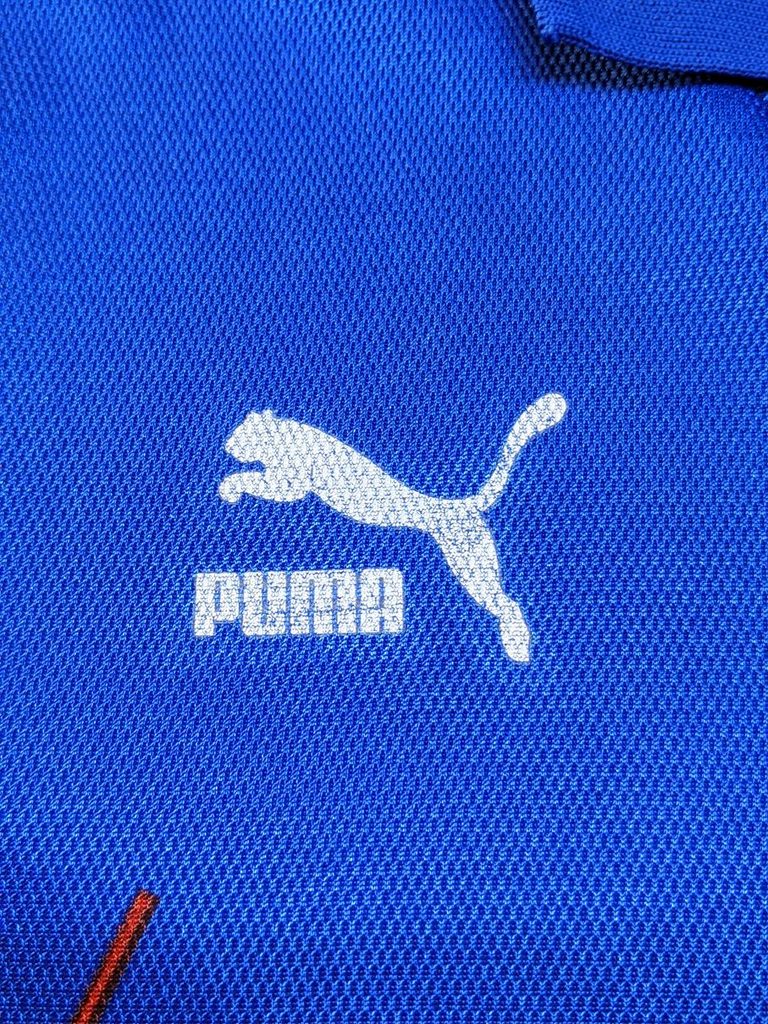
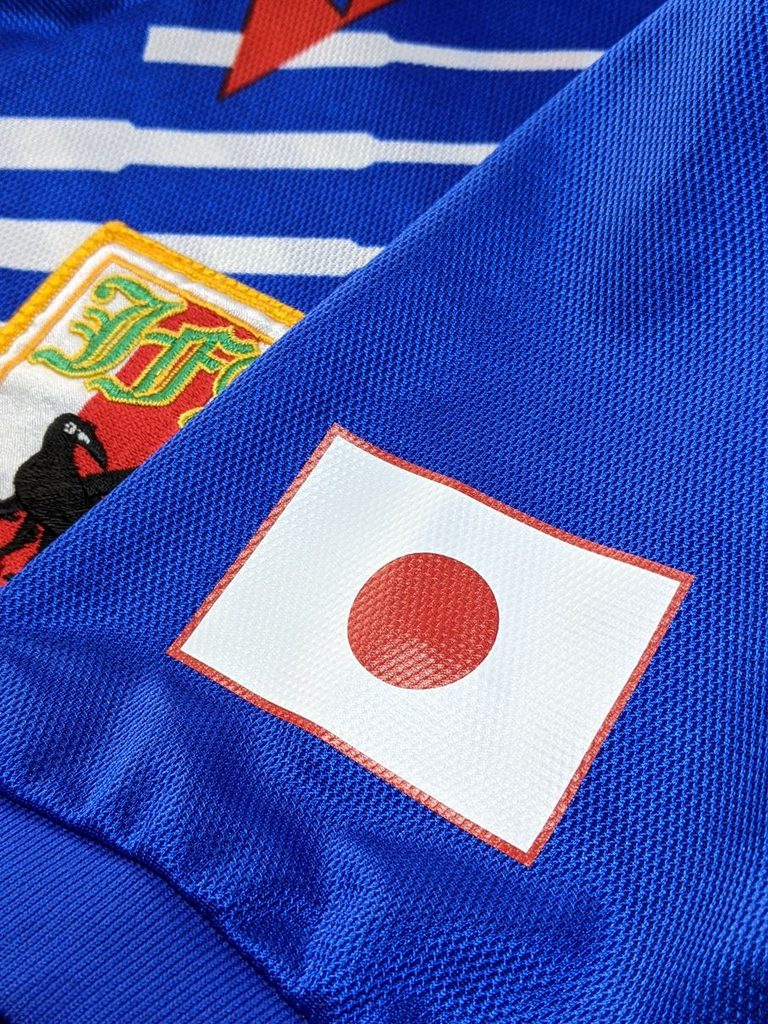
The shirt worn by Japan in Doha in 1993 was made by PUMA. Today, it is widely known among football shirt collectors as the “Doha Shirt.”
1993: A Major Turning Point for Japanese Football
1993 was a special year for Japanese football.
On May 15, the J.League, Japan’s first professional football league, officially kicked off.
The inaugural league featured 10 clubs, including Verdy Kawasaki, Yokohama Marinos, and Kashima Antlers.
At the same time, the Japan national team was fighting for a place at its first-ever World Cup.
At that time, Japan had never qualified for the World Cup.
Today, Japan’s participation in the World Cup is almost taken for granted.
But in 1993, the World Cup was still a distant dream for Japanese football.
It was during this period that Japan finally reached the point where qualifying for the World Cup began to feel like a realistic possibility, even as the team faced some of Asia’s strongest nations.
At the heart of the team were players such as Kazuyoshi Miura, Ruy Ramos, Masami Ihara, Tetsuji Hashiratani, and Tsuyoshi Kitazawa.
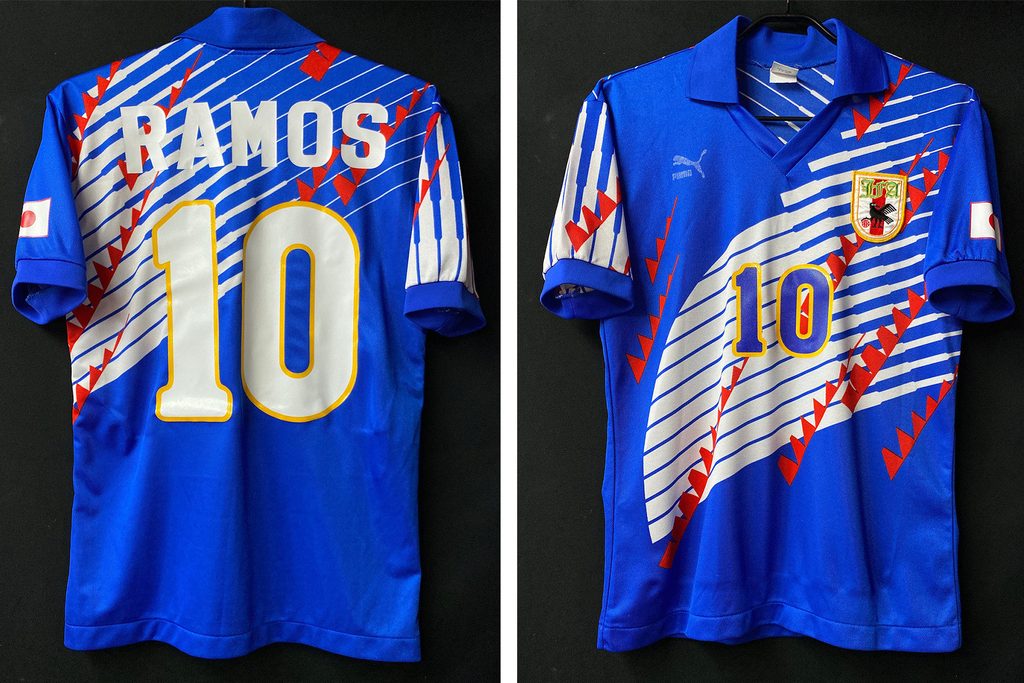
The Doha Shirt Was Made by PUMA
The Japan national team shirt worn during the “Tragedy of Doha” was made by PUMA.
At the time, Japan did not have a single manufacturer supplying its shirts for many consecutive years as it does today.
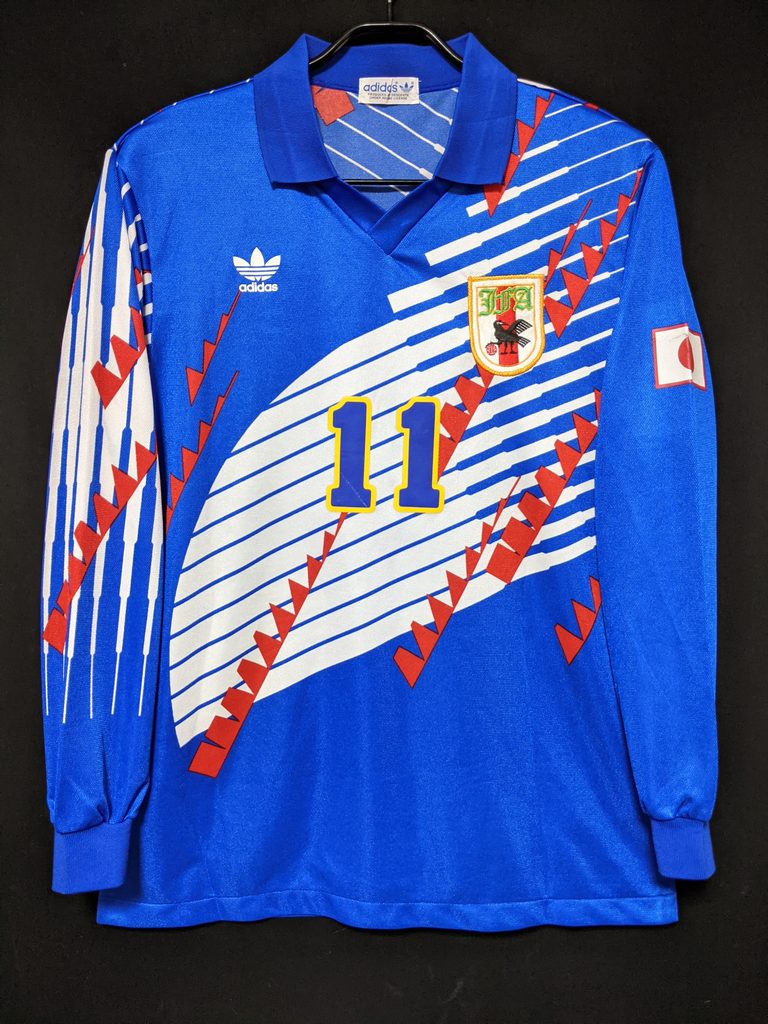
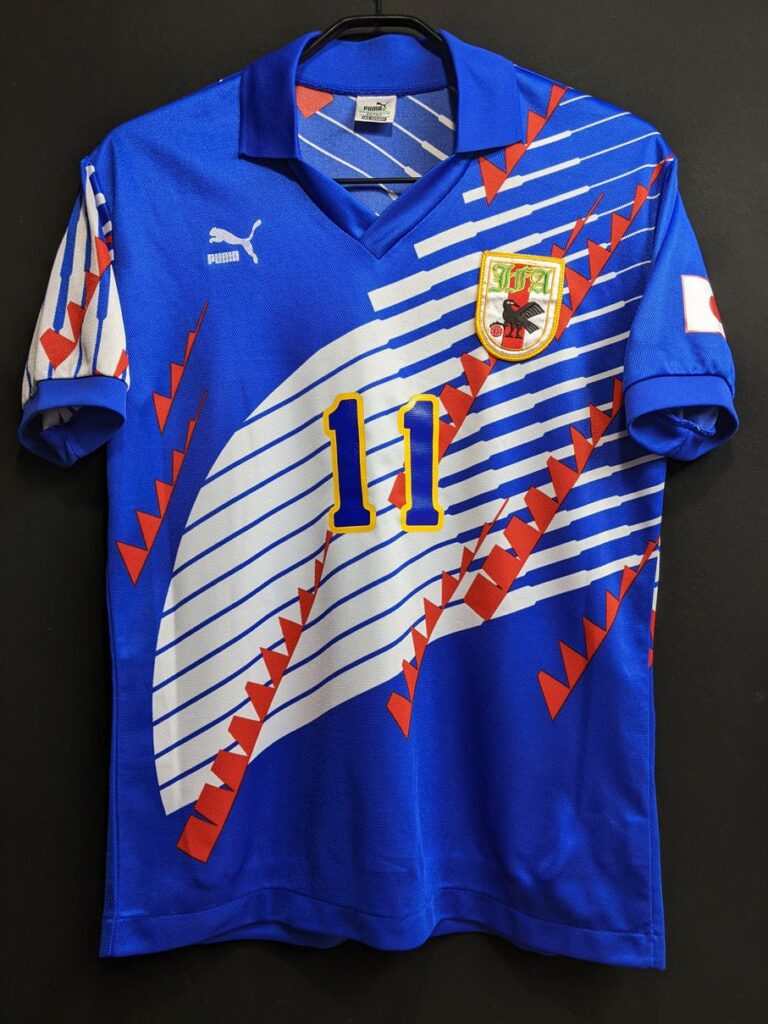
The manufacturers changed from year to year:
1992 – adidas

1993 – PUMA
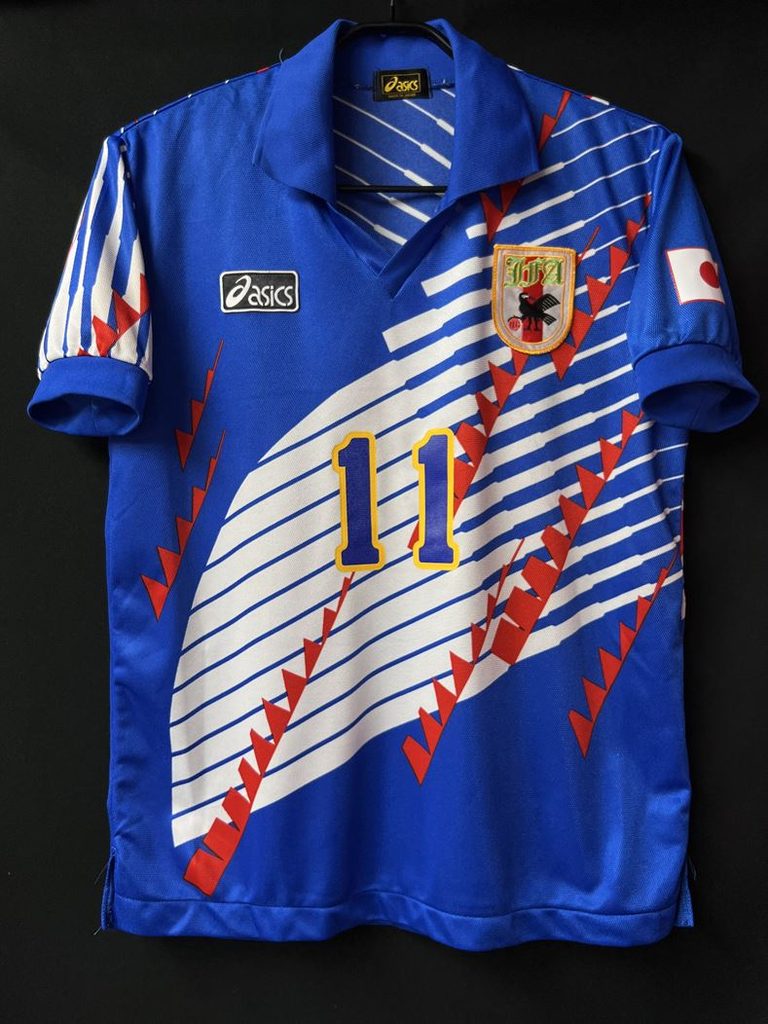
1994 – asics

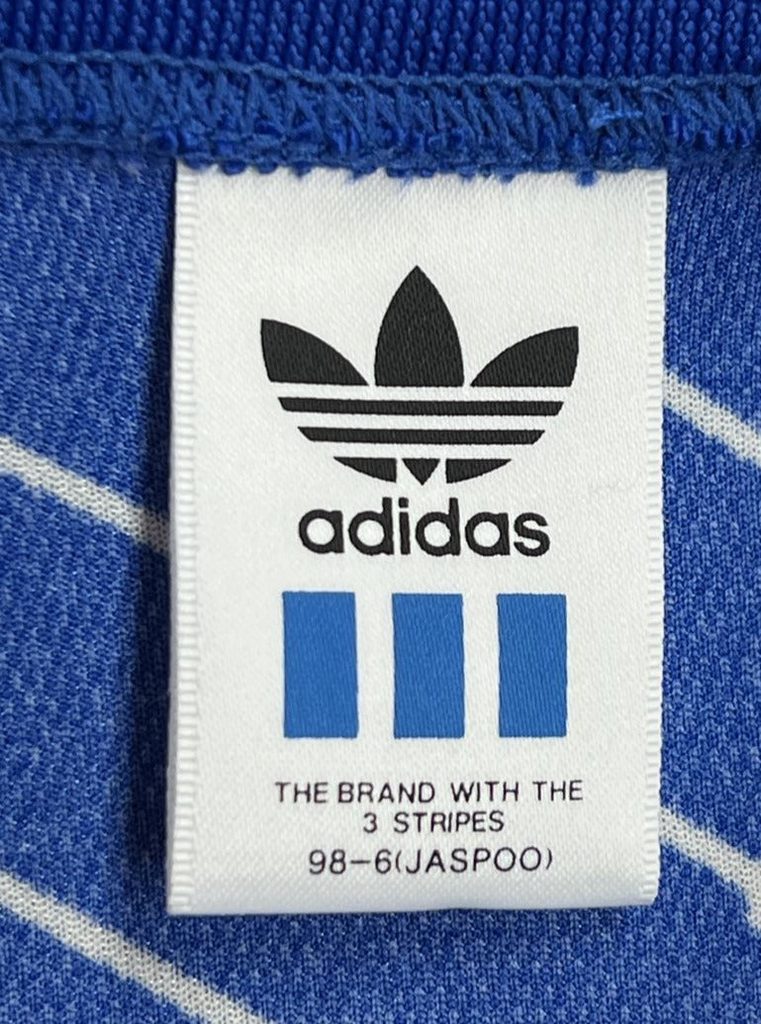
1995 – adidas
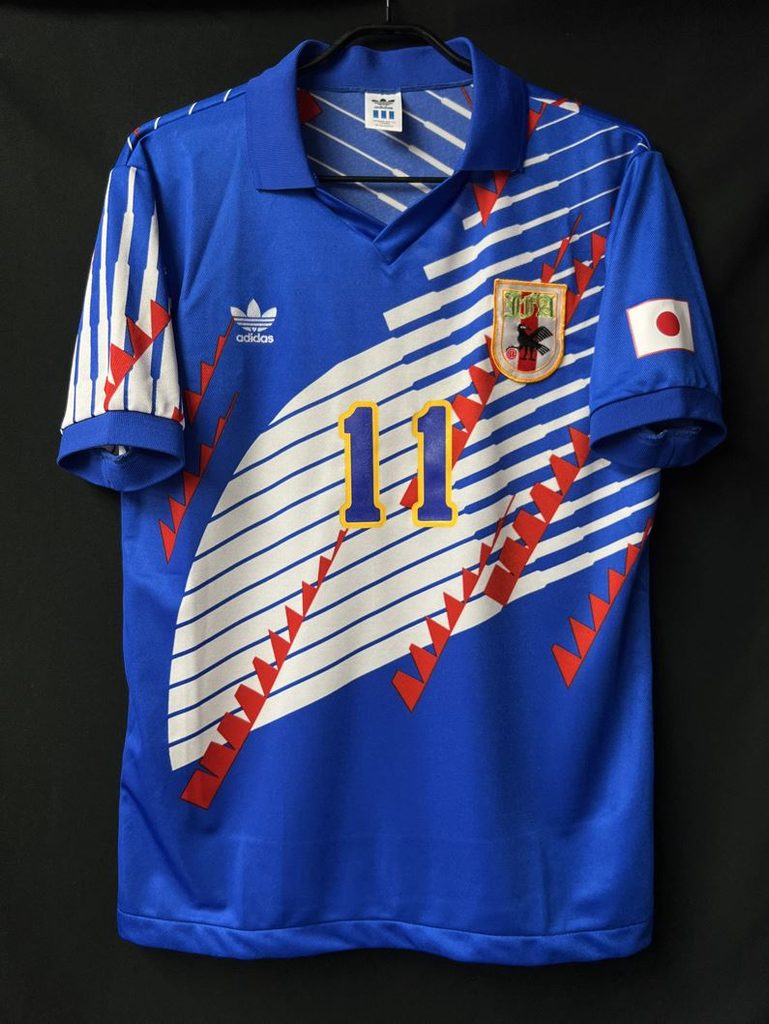
During this period, Japan generally used the same basic design while the manufacturer changed from year to year.
As a result, different versions of the same design exist depending on the manufacturer.
Among them, the 1993 PUMA model has particular historical significance.
It was the shirt worn by Japan on the night of the “Tragedy of Doha.”
The 1993 PUMA Model: Japan’s First National Team Shirt Sold to the Public
There is another important detail about the 1993 PUMA Japan shirt.
This model is regarded as the first Japan national team shirt to be officially sold to the general public.
Until then, Japan national team shirts were not products that ordinary fans could simply purchase in the same way they can today.
But in 1993, as interest in football grew rapidly following the launch of the J.League, the PUMA Japan shirt became available for fans to buy.
This means the shirt was more than just a Japan national team shirt.
It also represents the very early stages of a new football culture in Japan, in which fans began buying shirts to show their support for the national team.
For collectors, this background makes the 1993 PUMA model even more fascinating.
April 1993: The World Cup Qualifiers Begin with the PUMA Model
Japan began using its PUMA shirt in the first round of Asian qualifying for the 1994 World Cup in April 1993.
The first opponent was Thailand.
The match was played at Kobe Universiade Memorial Stadium on a chilly April day.
As this was the debut of the PUMA Japan shirt, all of Japan’s players wore the long-sleeved version.
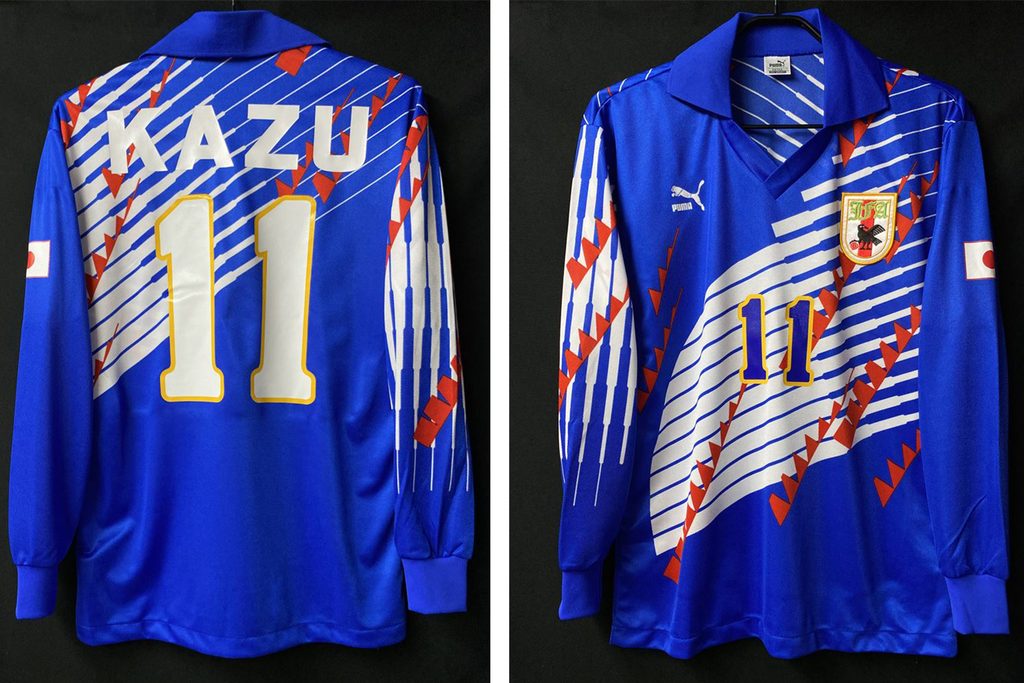
For collectors, this long-sleeved model is an especially interesting detail when looking at the 1993 PUMA Japan shirt.
The PUMA model would then accompany Japan through the later stages of the Asian qualifiers.
Ultimately, the shirt would remain with the national team all the way to the decisive final match in Doha, where a place at the 1994 World Cup was at stake.
A Japan Shirt Inspired by the Wings of the Yatagarasu
One of the most distinctive features of the PUMA Japan shirt is its design.
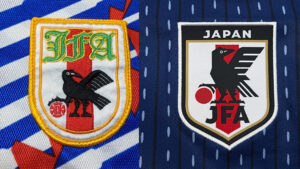
The shirt incorporates graphics inspired by the Yatagarasu, the three-legged crow depicted on the Japan Football Association emblem.
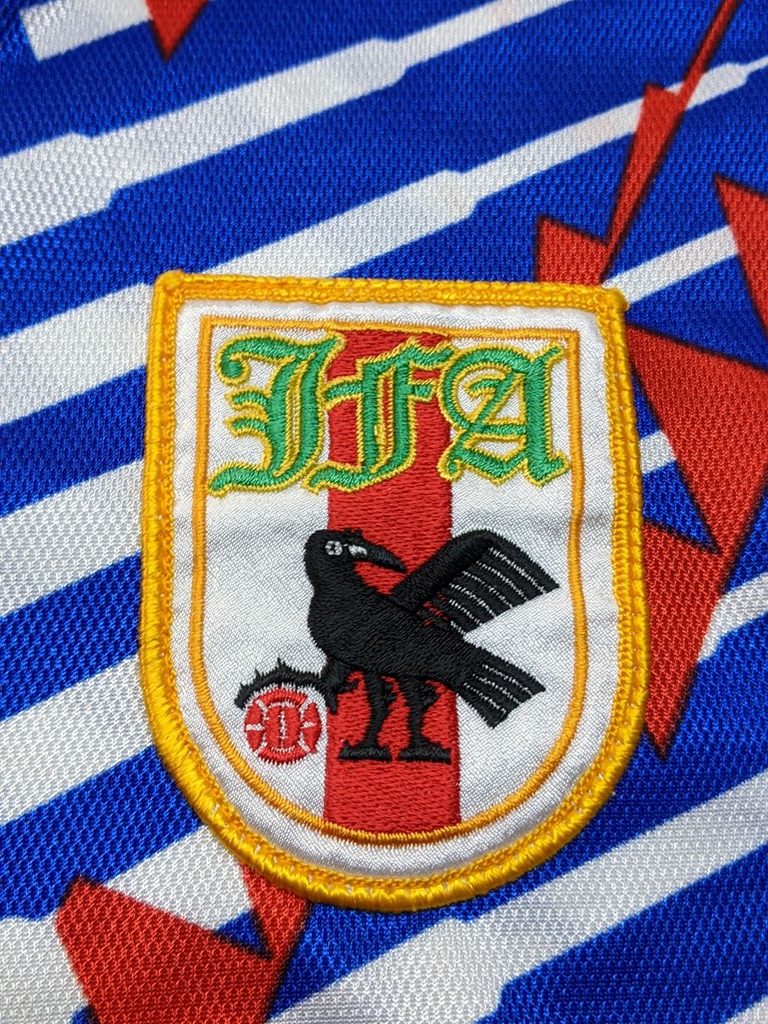
The Yatagarasu has long been used as a symbol of the Japan Football Association and Japanese football.
On this shirt, the design evokes the wings of the Yatagarasu and spreads across the shirt.
Compared with modern Japan national team shirts, the designs of the 1990s were much more adventurous, with bold graphics playing a central role.
For that reason, the 1993 model remains highly popular among collectors as one of the shirts that represents Japan football in the early 1990s.
The 1993 Japan Home Shirt
Japan’s shirts during this period did not have the dramatic differences between home and away designs that are common today.
The home model was based on Japan’s traditional blue, combined with graphics inspired by the wings of the Yatagarasu.
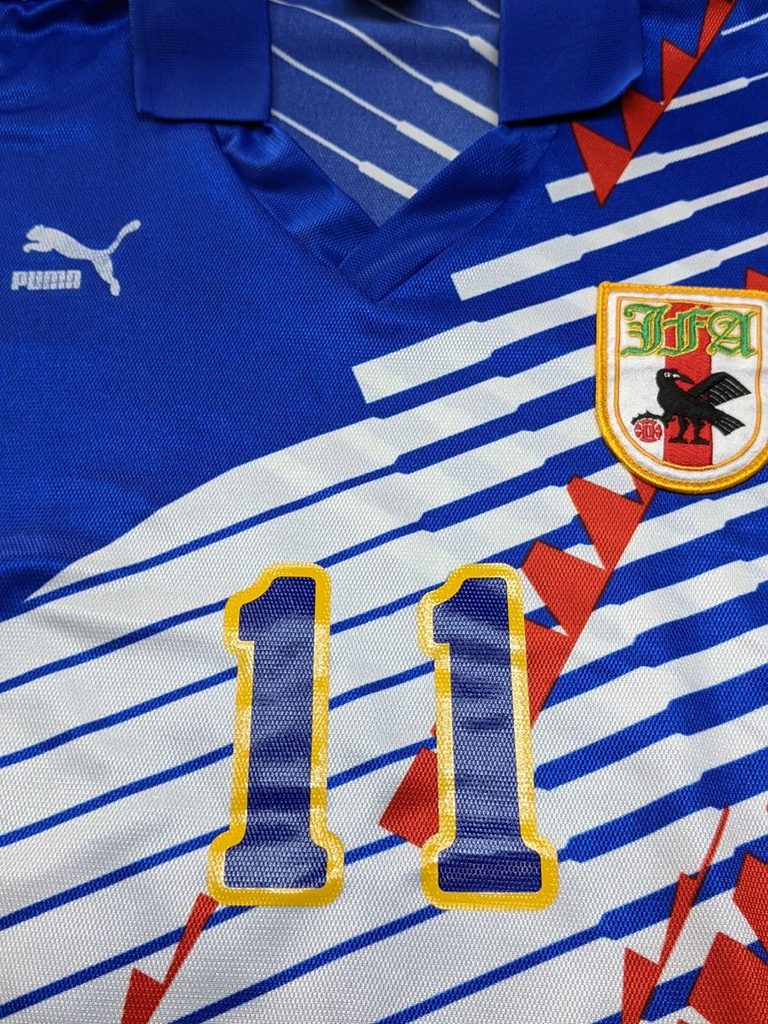
Considering the era in which it was worn, the shirt captures the atmosphere of a period when Japanese football was undergoing a dramatic transformation as it moved into the professional era.
The launch of the J.League.
Japan’s first serious attempt to qualify for the World Cup.
And a generation of star players led by Kazuyoshi Miura.
Simply looking at this shirt brings back the atmosphere of Japanese football in 1993.
The Away Shirt: Another Important Part of the ‘Tragedy of Doha’ Story
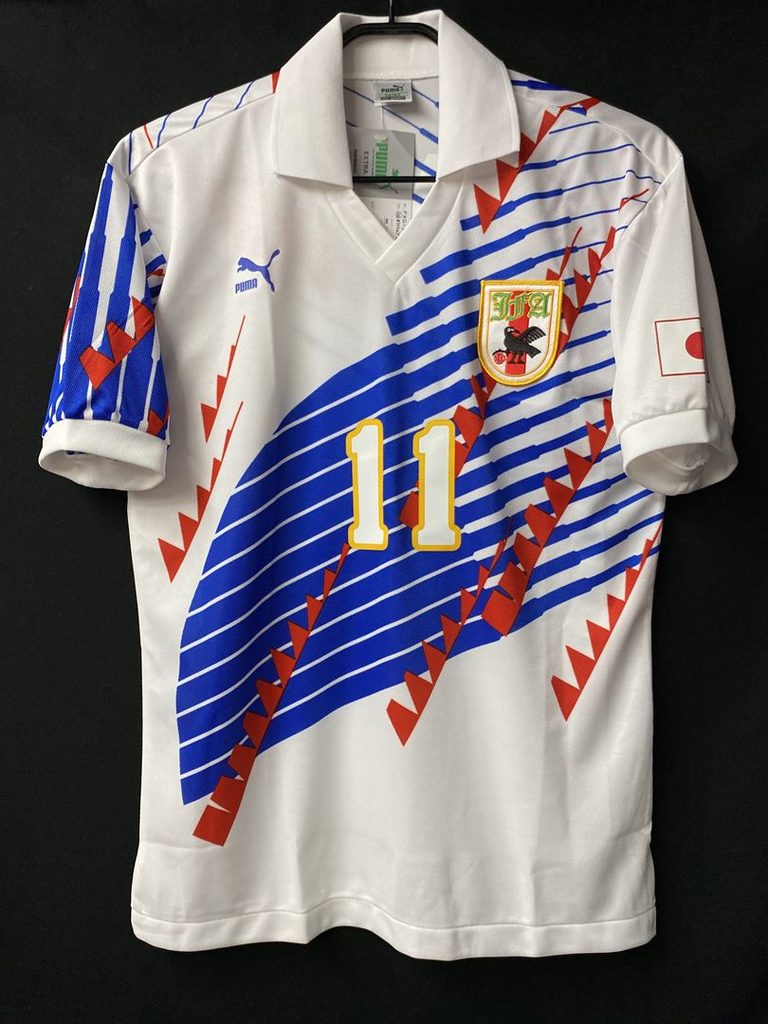
The 1993 PUMA Japan shirt was available not only as a home model but also as an away model.
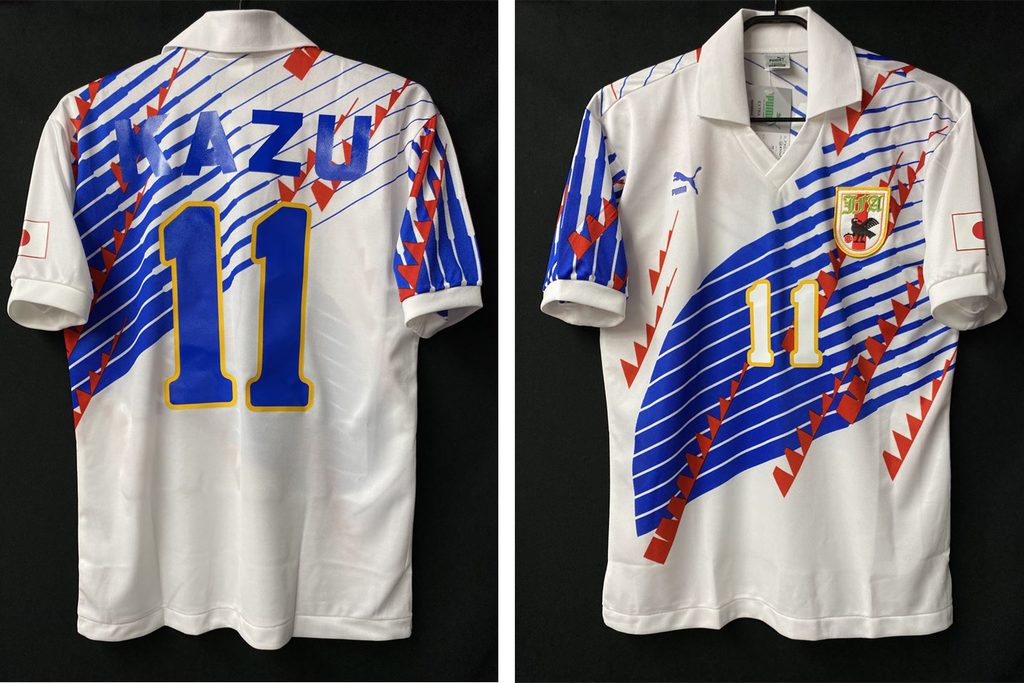
What makes the away model particularly interesting is that it was used in two crucial matches during the Asian final qualifying round.
Japan wore the away model against Iran in the second match of the final qualifying round and then against South Korea.
The match against South Korea was especially important for Japan.
South Korea: Lose and the Dream Would Be in Serious Trouble
By the time Japan faced South Korea, the team was under enormous pressure.
A defeat would put Japan’s World Cup hopes in serious danger.
A victory, on the other hand, would bring Japan much closer to its first World Cup appearance.
It was a crucial match.
In attack, Japan started with Kazuyoshi Miura and Masashi Nakayama as a two-man strike partnership.
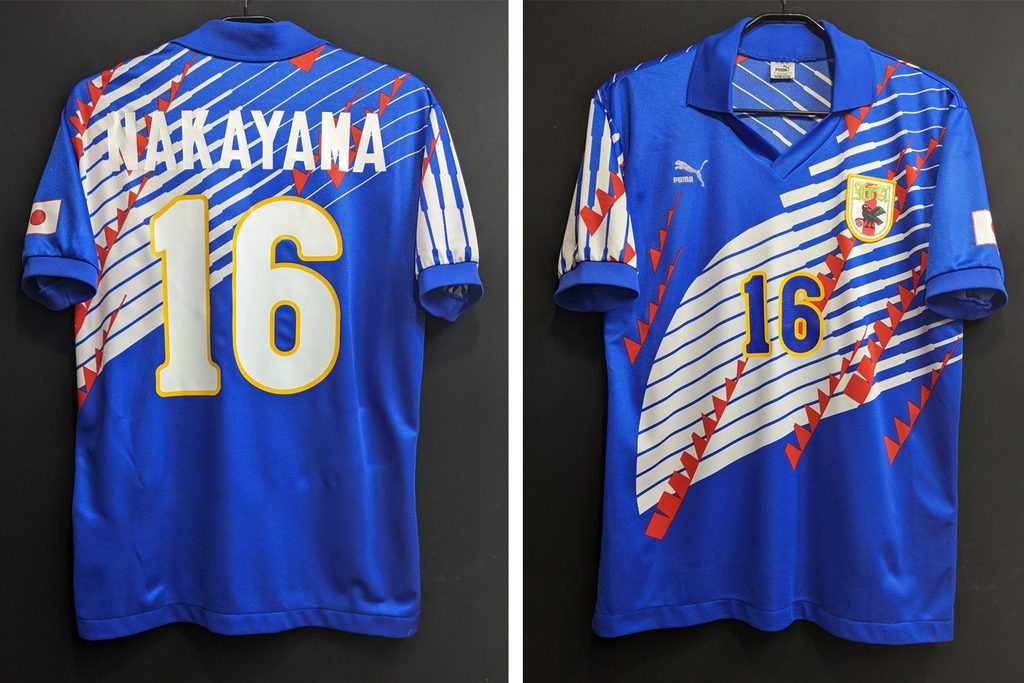
Nakayama had often been used as a super-sub up to that point.
However, for this crucial match against South Korea, he was selected to start.
Miura and Nakayama formed the front two and took on the South Korean defense.
Kazuyoshi Miura’s Goal and a Celebration Without the ‘Kazu Dance’
Japan controlled much of the match.
Then, 15 minutes into the second half, Kazuyoshi Miura scored to give Japan the lead.
It was a hugely important goal for the national team.
Miura was famous for performing his trademark “Kazu Dance” after scoring.
But this time, the emotion of the moment was so overwhelming that he celebrated without even performing his usual dance.
Japan then held off South Korea’s response.
The match ended 1-0.
It was the first time Japan had beaten South Korea in a World Cup qualifying match.
Japan Beat South Korea and Moved into First Place
The victory represented a major step forward for Japan.
By defeating South Korea, one of its biggest rivals in Asia, Japan put itself in a strong position in the race for World Cup qualification.
With one match remaining, Japan moved into first place.
Just one match to go.
The opponent was Iraq.
If Japan could get through that final match, the dream of reaching its first World Cup would finally become reality.
An entire nation was waiting for that moment.
But what awaited Japan in the final match would become one of the most dramatic endings in the history of Japanese football.
And Then Came the ‘Tragedy of Doha’
October 28, 1993.
In Doha, Qatar, Japan faced Iraq in the final match of the Asian final qualifying round.
A victory would secure Japan’s first-ever appearance at the World Cup in the United States.
The match came to life after just five minutes.
Kazuyoshi Miura headed the ball into the net to give Japan an early lead.
Japan had made the perfect start.
The first half ended with Japan still leading 1-0.
However, 10 minutes into the second half, Iraq equalized to make it 1-1.
Japan responded by taking the lead again.
In the 69th minute, Ruy Ramos played a superb through ball, sending Masashi Nakayama through from a position right on the edge of offside.
Nakayama finished into the bottom-right corner to put Japan back in front at 2-1.
Only a short amount of time remained.
Japan was just minutes away from reaching its first World Cup.
But then Japan received some important news from the other matches being played at the same time.
The other two matches had already finished: Saudi Arabia had beaten Iran 4-3, while South Korea had defeated North Korea 3-0.
South Korea’s three-goal victory dramatically changed the situation.
Japan now had to beat Iraq to secure a place at the World Cup.
Nothing less than a victory would be enough.
The match entered stoppage time.
Japan continued to protect its lead as the final whistle drew closer.
But just as victory seemed within reach, the decisive moment arrived.
In stoppage time, Iraq won a corner.
From that corner, Iraq scored the equalizer.
Japan had been pegged back to 2-2 at the very last moment.
The score was 2-2.
The match ended shortly afterward.
Japan had come within touching distance of its first World Cup appearance, only to lose its place at the very end.
The dream that had seemed so close disappeared in a matter of moments.
The dramatic ending would later become known as the “Tragedy of Doha,” one of the most painful episodes in the history of Japanese football.
Why Was It Called the ‘Tragedy of Doha’?
The match became known in Japan as the “Tragedy of Doha” not simply because of its dramatic ending.
Japan appeared to have its first World Cup appearance almost within reach, only to concede a late equalizer and lose its chance to qualify.
Not only the players but football fans across Japan were watching the match on television as the drama unfolded.
In the early 1990s, the World Cup was still not nearly as familiar to Japanese fans as it is today.
Many people were eagerly waiting for the moment when Japan would finally step onto the world stage.
That made losing the opportunity at the very last moment an enormous shock for Japanese football.
The phrase “Tragedy of Doha” would remain in Japanese football history as a symbol of that disappointment and heartbreak.
But Doha Was Not the End of Japanese Football
The “Tragedy of Doha” was a major setback for Japanese football.
However, one of the most important things about what happened afterward was that Japan did not allow the disappointment to define its future.
The J.League continued to grow, and professional football gradually became established in Japan.
Japanese players also began taking on challenges overseas, while the competitiveness of the national team continued to improve.
Then came 1998.
Japan finally qualified for its first-ever World Cup, reaching the finals in France.
Five years after Doha, Japan once again fought through Asian qualifying and this time succeeded in reaching the World Cup.
Japan would go on to become a regular participant at the World Cup, eventually reaching the knockout stage at multiple tournaments.
Of course, the subsequent development of Japanese football cannot be attributed to the “Tragedy of Doha” alone.
The launch of the J.League, Japanese players moving abroad, improvements in youth development, and the development of Japan’s domestic football infrastructure all played important roles.
However, the disappointment experienced in Doha in 1993 remains one of the important events when looking at the growth of the Japan national team and Japanese football as a whole.
Why the ‘Doha Shirt’ Is So Special
For football shirt collectors, the 1993 PUMA Japan shirt is much more than simply an attractive vintage design.
It captures one of the biggest turning points in Japanese football history.
The year the J.League was launched.
The year Japan came closer than ever before to qualifying for its first World Cup.
The era of star players such as Kazuyoshi Miura and Ruy Ramos.
And the year Japan narrowly missed out on World Cup qualification in Doha.
On top of all that, this was the PUMA model that became the first Japan national team shirt to be officially sold to the general public.
All of these stories come together in a single shirt, which is why the 1993 PUMA model has become such a special piece of football history and is known among collectors as the “Doha Shirt.”
Two Doha Shirts: Home and Away
For anyone collecting the 1993 PUMA Japan national team shirts, both the home and away models are worth looking at.
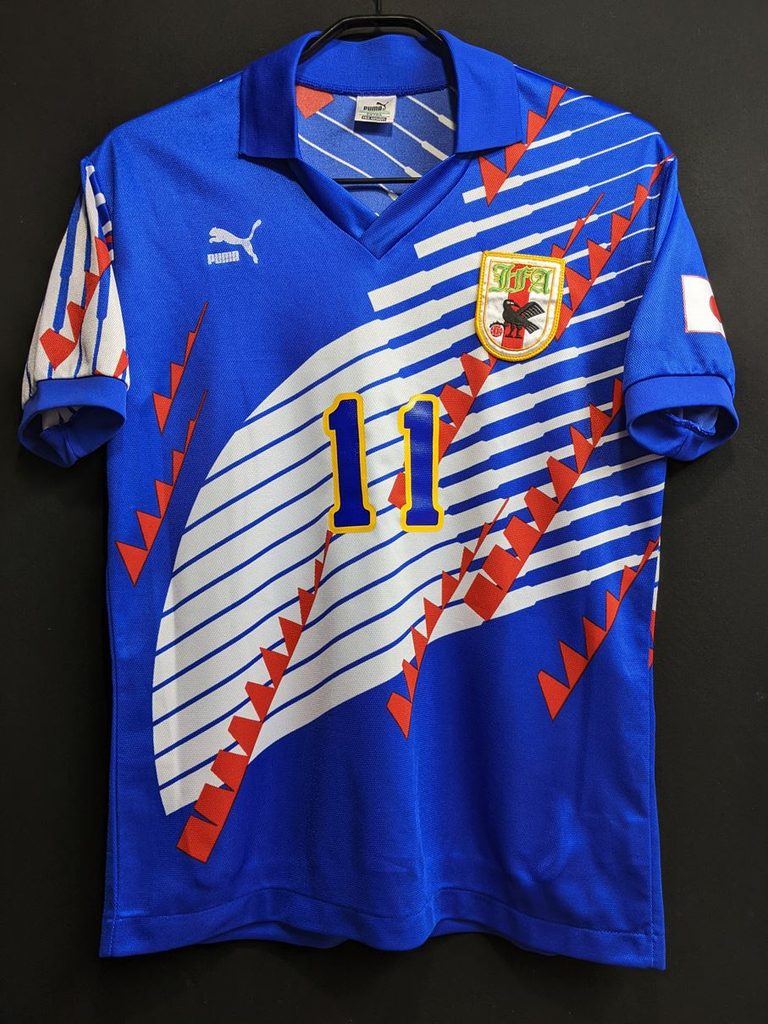
The home model is based on the blue traditionally associated with Japan, with graphics inspired by the wings of the Yatagarasu.
The away model, meanwhile, was used against Iran and South Korea during the Asian final qualifying round.
Against South Korea in particular, Japan won 1-0 thanks to Kazuyoshi Miura’s goal.
That victory put Japan at the top of the group and brought the team much closer to its first World Cup appearance.
Waiting next was the final match against Iraq.
What happened in that match would later become known as the “Tragedy of Doha.”
In that sense, the away model is also an important part of the story of Japan’s journey to Doha.