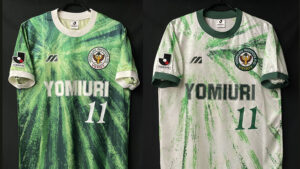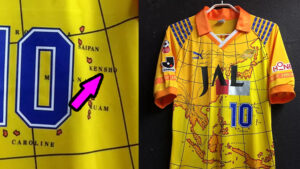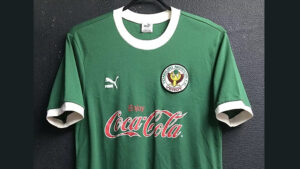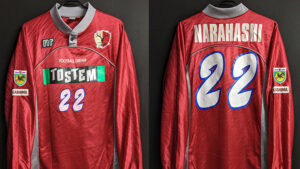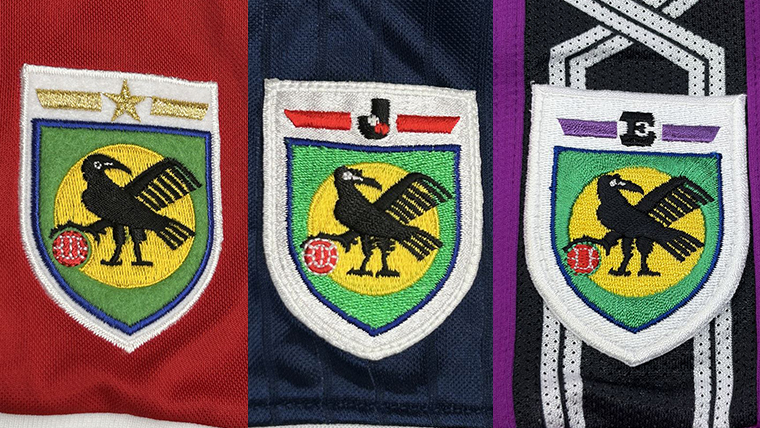
When looking through vintage J.League shirts, you may come across shirts featuring a patch on the right sleeve depicting a three-legged crow.
Among collectors, this patch is commonly known as the “Yatagarasu Patch.”
It was more than just a design.
Clubs that had won a major title such as the J.League or Emperor’s Cup in the previous season wore this special emblem the following season to show that they were the defending champions.
It is one of the distinctive shirt details from the early years of the J.League through the 2000s, and one that can no longer be seen on modern J.League shirts.
What Was the Yatagarasu Patch?
The Yatagarasu Patch was a champion’s patch featuring the three-legged “Yatagarasu” crow, the symbol of the Japan Football Association (JFA).
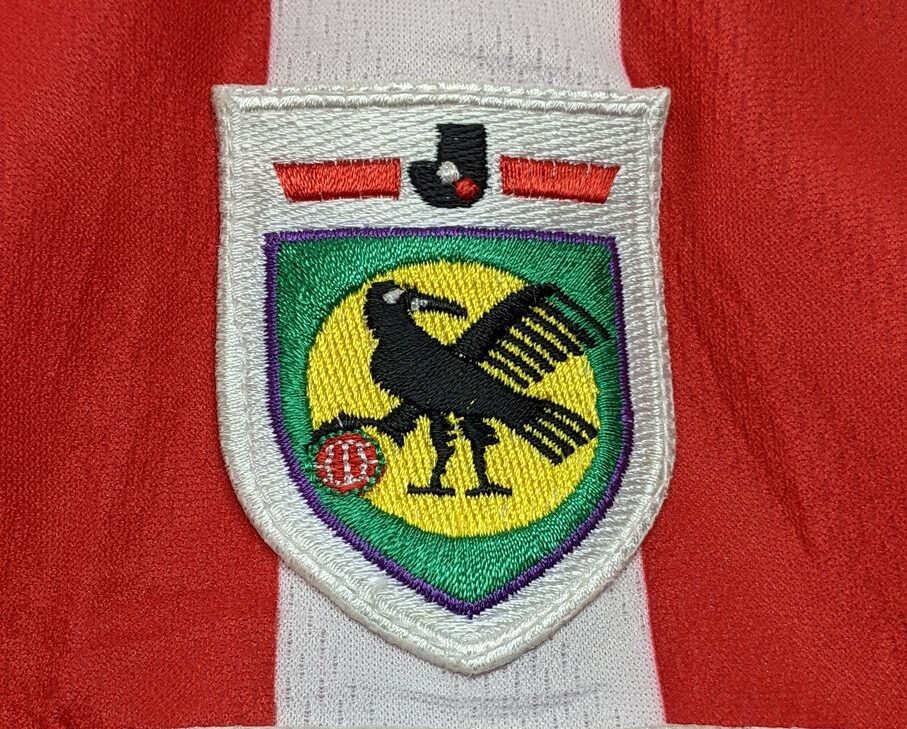
Only clubs that had won a major title in the previous season were allowed to wear this special patch on their shirts during the following season.
In other words, you could tell simply by looking at the shirt that “this club won a title last season.”
Especially during the early years of the J.League, it was an important shirt detail that indicated a club was the reigning champion.
There Were Three Types of Yatagarasu Patch
There were three different versions of the Yatagarasu Patch, depending on which title the club had won.
1. J.League Champion
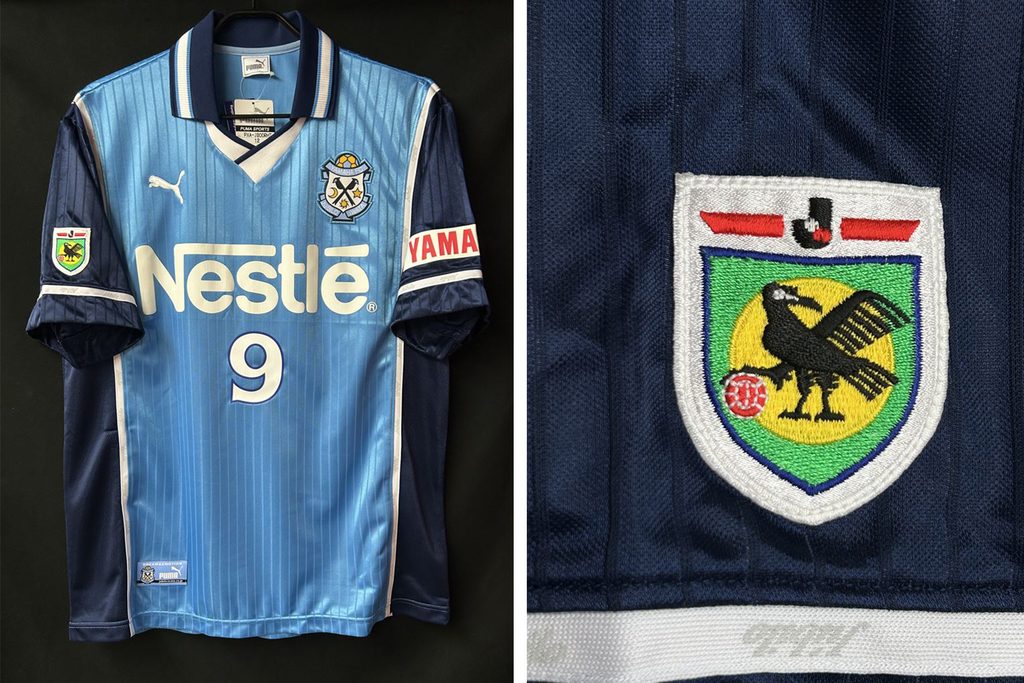
This patch was awarded to the J.League champions.
It featured a red line combined with the J.League logo, indicating that the club had won the league title the previous season.
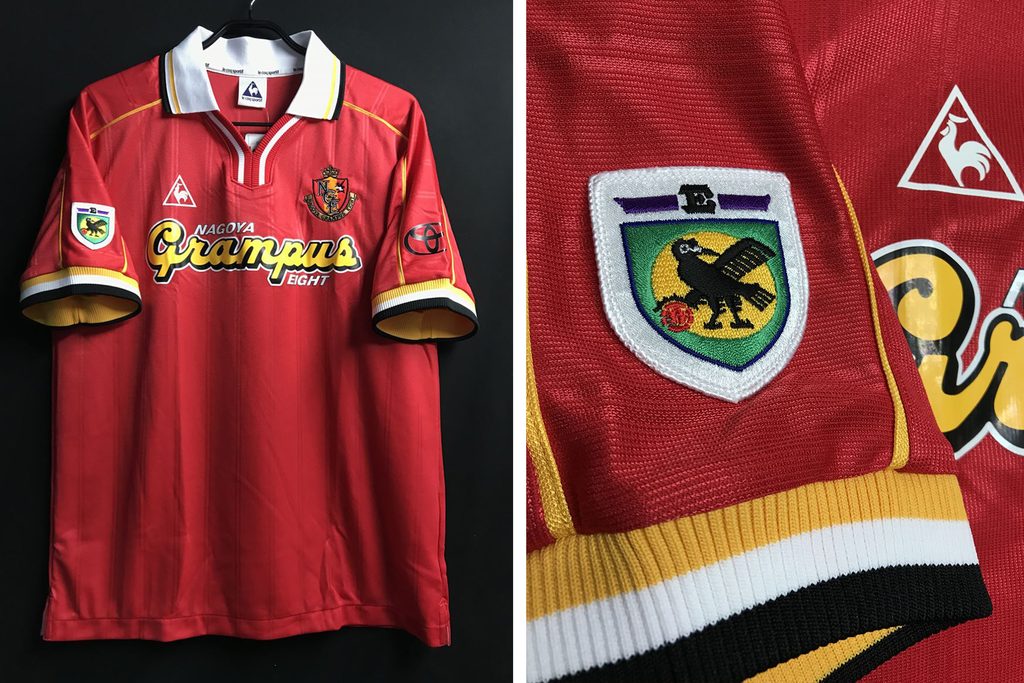
2. Emperor’s Cup Champion
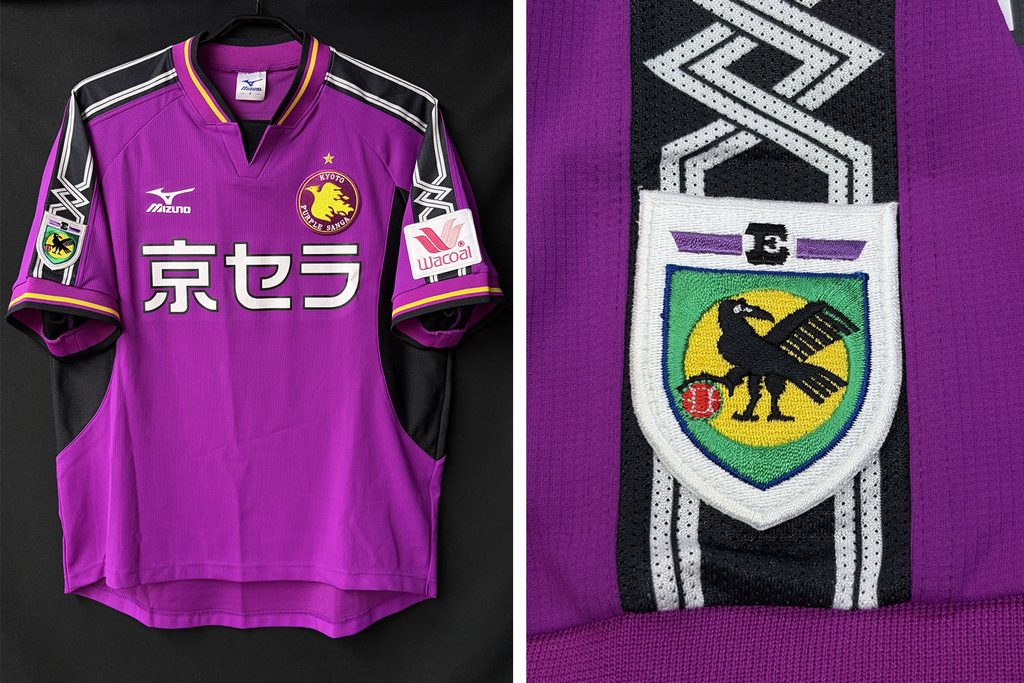
This patch was worn by clubs that had won the Emperor’s Cup.
It featured a purple line and an “E” emblem, with the “E” standing for Emperor.
Rather than indicating a J.League title, this patch represented victory in the Emperor’s Cup.
3. Double Champions
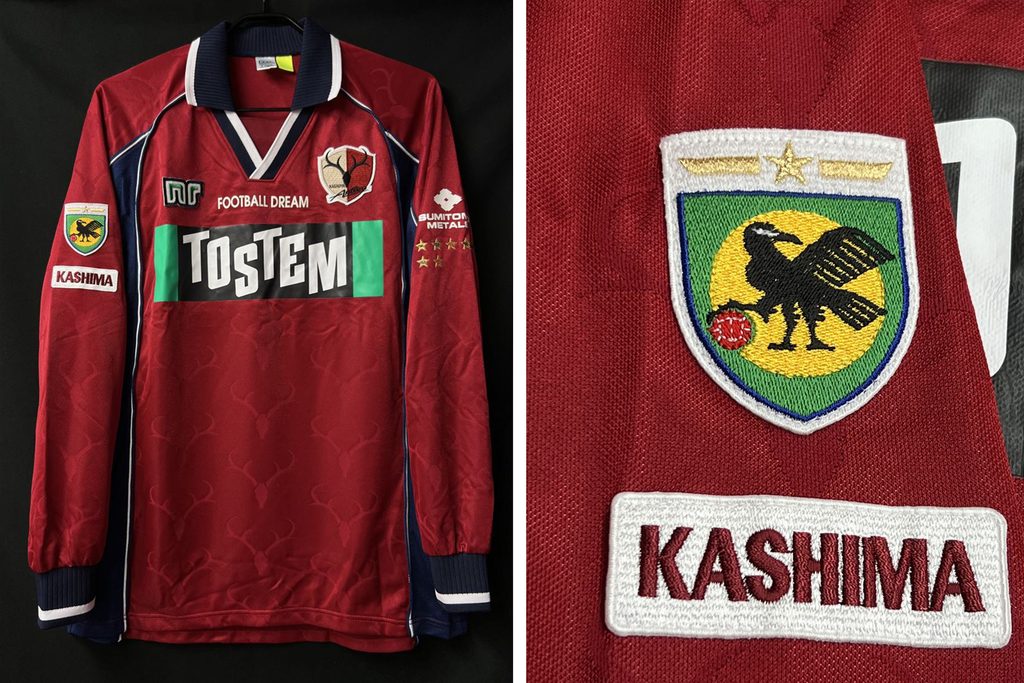
Clubs that won both the J.League title and the Emperor’s Cup in the same season received a special patch.
It featured a yellow line combined with a star emblem, representing the achievement of winning both the league and the Emperor’s Cup.
These three designs were the basic variations of the champion’s patch commonly known as the “Yatagarasu Patch.”
Only the Previous Season’s Champions Could Wear It
One of the most interesting things about this patch is that it was not worn during the season in which the title was won. Instead, it was attached to the shirt for the following season.
For example, if a club won the J.League in 1997, it would wear the champion’s patch during the 1998 season.
For this reason, when dating a vintage shirt, it is important to distinguish between the season in which the patch appears on the shirt and the season represented by the title it commemorates.
This is also an important detail for collectors of vintage J.League shirts.
The Star Patch for Double Champions
Of the three versions, the star patch for double champions is particularly rare.
Only clubs that won both the J.League title and the Emperor’s Cup in the same season used this special design.
For example, Kashima Antlers and Urawa Reds wore the star version of the champion’s patch after achieving the double.
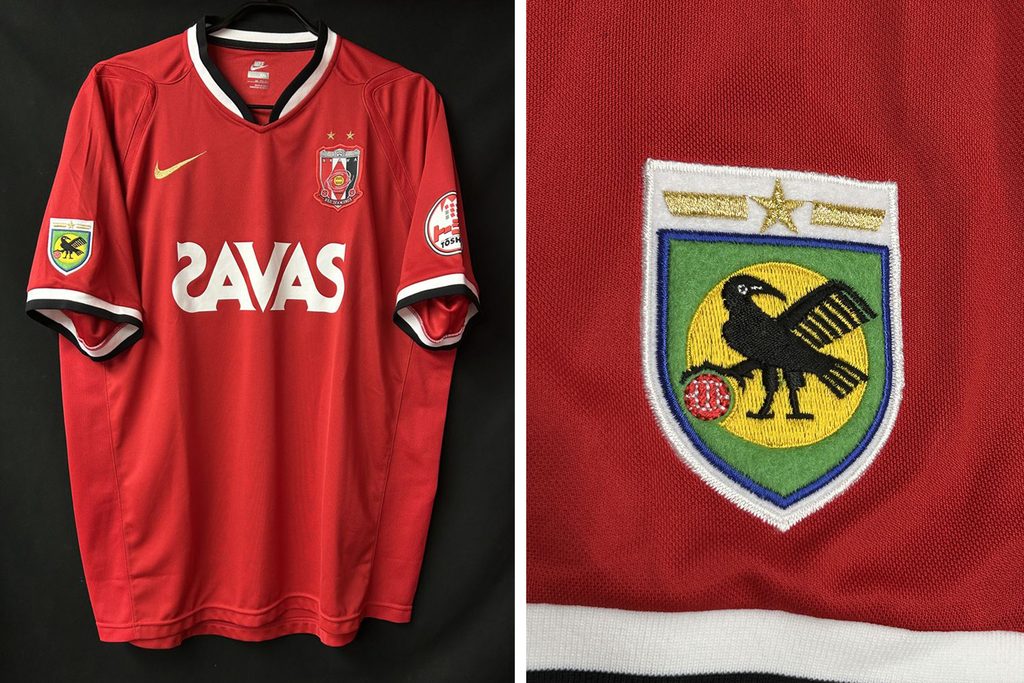
Because its design was different from the regular league champion and Emperor’s Cup champion versions, it is an especially interesting detail for collectors.
When Was the Yatagarasu Patch Discontinued?
This traditional champion’s patch was used on J.League shirts for many years, but it was discontinued after the 2008 season.
From the 2009 season, new champion’s patches were introduced.
This means that the 2008 season was the final season in which the old style of champion’s patch featuring the Yatagarasu was used.
From 2009 onward, the J.League and Emperor’s Cup adopted their own distinct designs.
What Changed from 2009?
From the 2009 season, the design of the champion’s patches changed significantly.
Instead of the traditional Yatagarasu-based design, the J.League champions were given a champion’s patch featuring a gold J.League emblem.
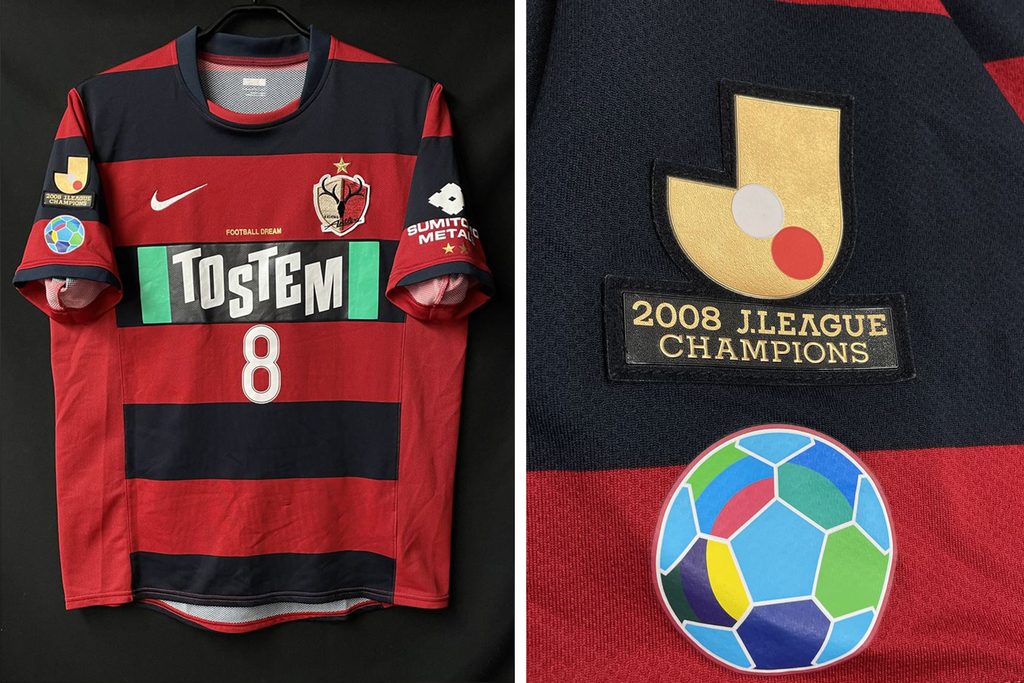
Meanwhile, the Emperor’s Cup winners began wearing a distinctive Emperor’s Cup emblem featuring cherry blossom petals rather than the Yatagarasu.
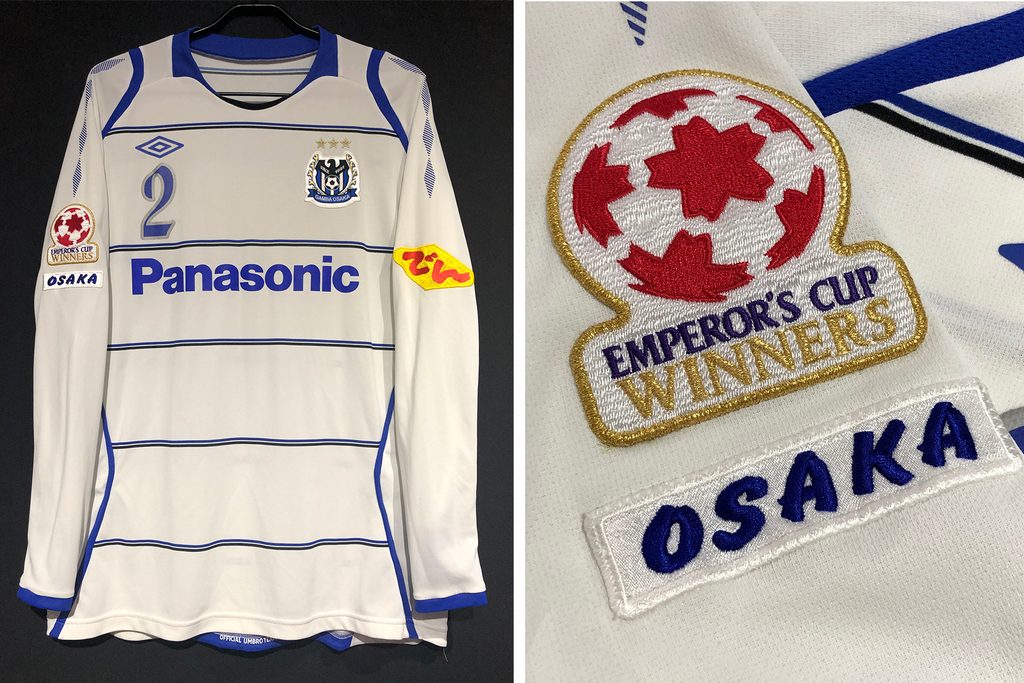
This marked a shift toward designs that more clearly represented the separate identities of the J.League and the Emperor’s Cup.
Why Was the Yatagarasu Patch Discontinued?
The Yatagarasu is originally the symbol of the Japan Football Association (JFA).
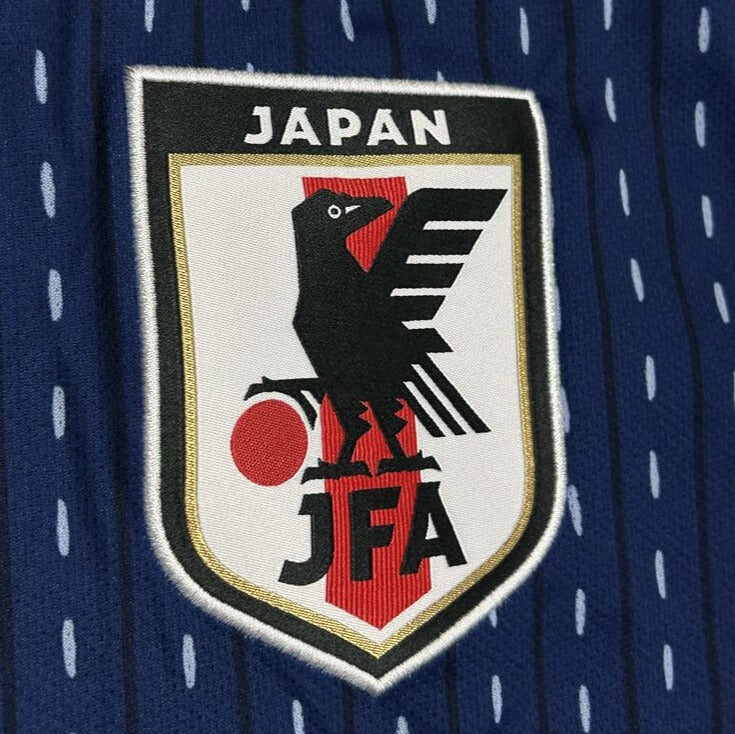
At the same time, as the J.League developed as a professional league, it established its own brand and identity.
As a result, the system moved toward using a J.League-specific emblem for the league champions and a tournament-specific symbol for the Emperor’s Cup, giving each competition a clearer visual identity.
As a result, the Yatagarasu-based champion’s patch, which had been used for many years, eventually came to the end of its role.
Champion’s Patches Today
Today in the J.League, the previous season’s J1 champions generally wear a champion’s patch featuring the gold J.League emblem on their shirts.
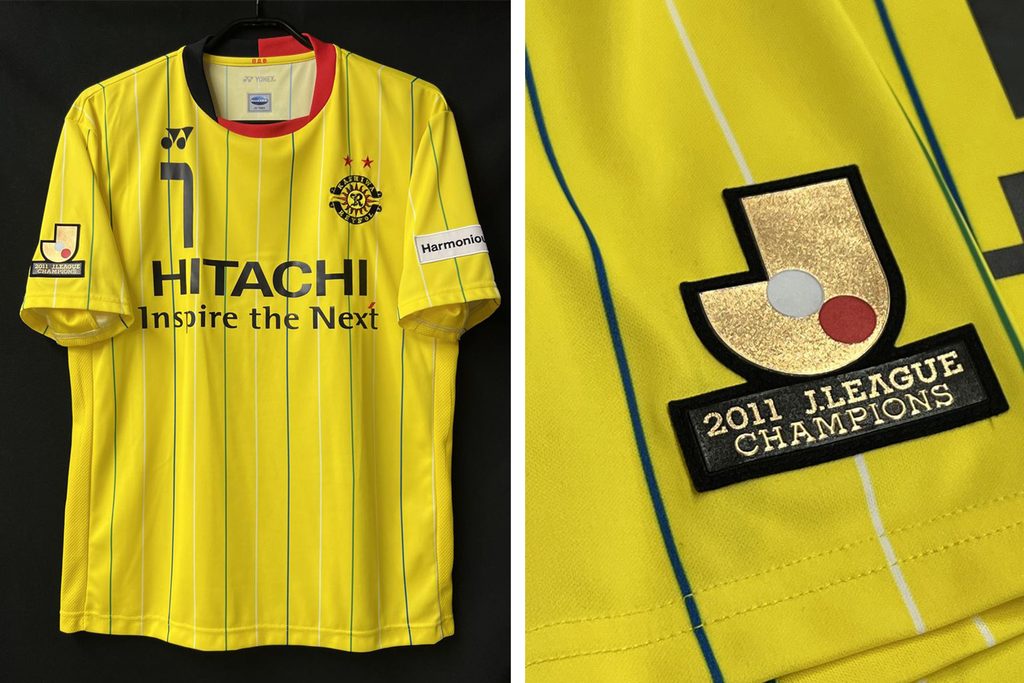
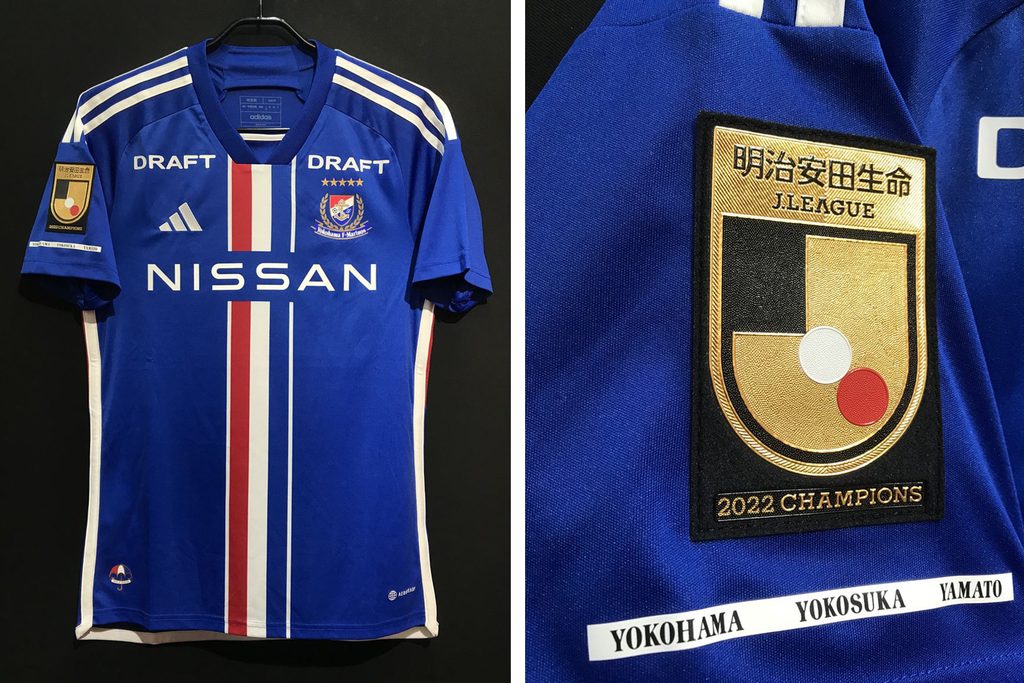
Unlike the old Yatagarasu Patch, the design no longer uses the JFA’s symbol.
For this reason, Yatagarasu Patch shirts worn by former J.League champions such as Kashima Antlers, Urawa Reds, Kawasaki Frontale, and Yokohama F. Marinos have become a distinctive piece of J.League history that can no longer be seen on modern shirts.
What to Look for When Examining Vintage J.League Shirts
The Yatagarasu Patch is more than just decoration.
By looking at which version of the patch is present, you can determine whether the shirt represents the previous season’s J.League champions, Emperor’s Cup champions, or double champions.
Comparing the patch design with the shirt’s era can also provide an important clue when identifying the season in which the shirt was worn.
Now discontinued, the Yatagarasu Patch offers a fascinating glimpse into the champion system and shirt culture of an era when the J.League was still developing.
So when you pick up a vintage J.League shirt, don’t just look at the club crest or sponsor. Take a closer look at the small Yatagarasu on the sleeve, too.