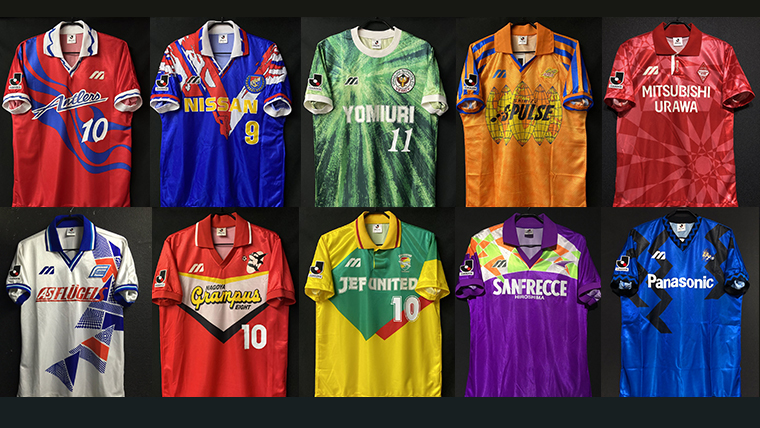
The Original 10 That Launched the J.League
On May 15, 1993, Japan’s first professional soccer league, the J.League, officially kicked off.
Ten clubs took part in the inaugural season. These clubs are now known as the “Original 10.”
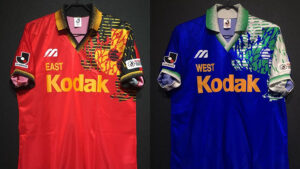
Today, it is common for J.League clubs to display corporate logos on the chest of their shirts. However, the shirts worn when the J.League began in 1993 had some interesting differences from those we see today.
One of the most fascinating details is the chest sponsorship.
At the time, some clubs prominently displayed the names of their parent companies or major corporate sponsors, while others featured the club name itself on the chest.
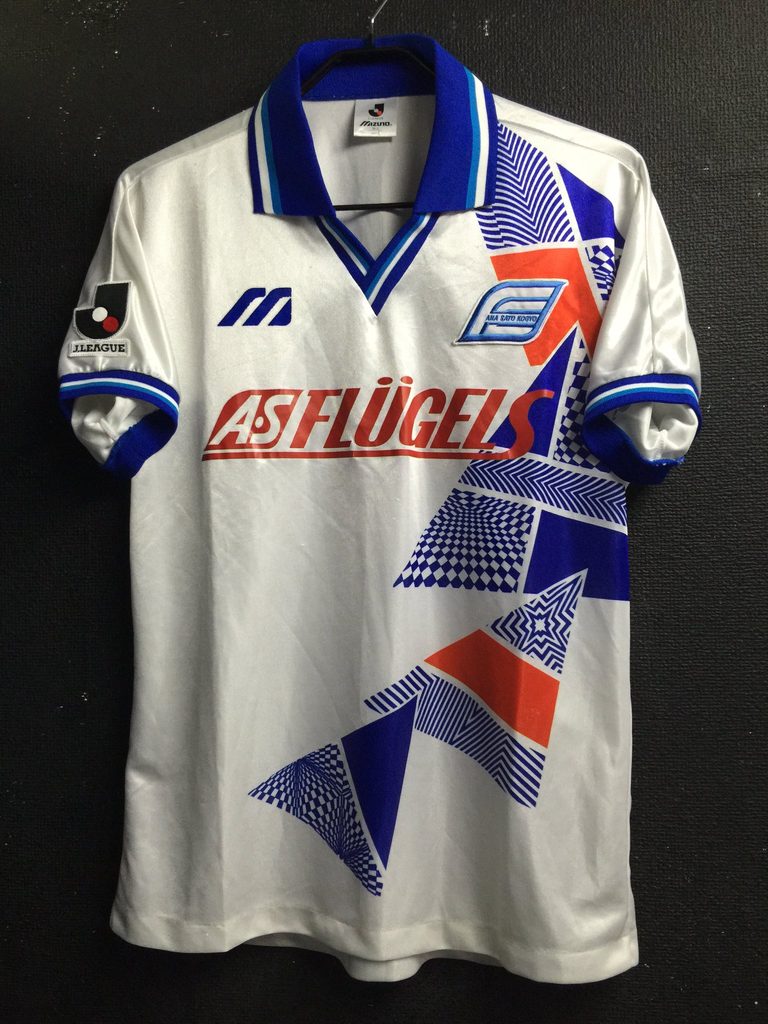
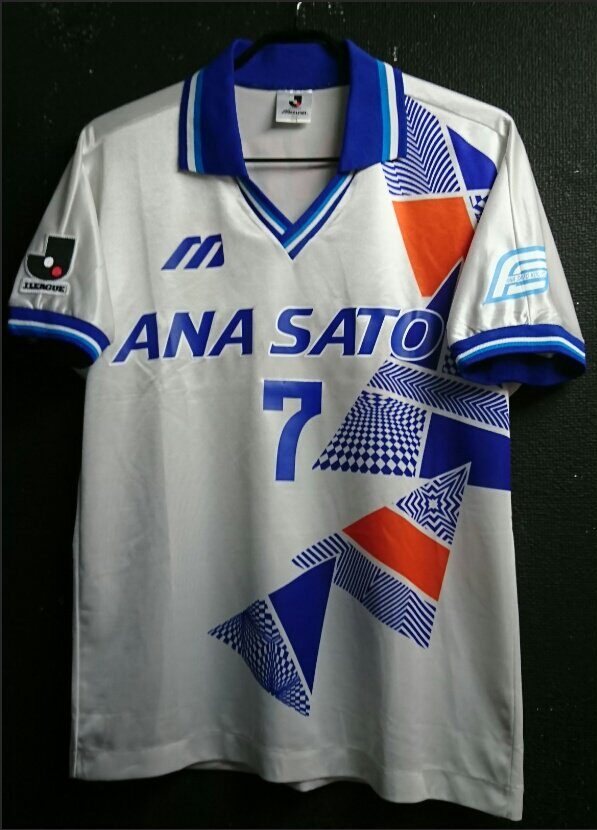
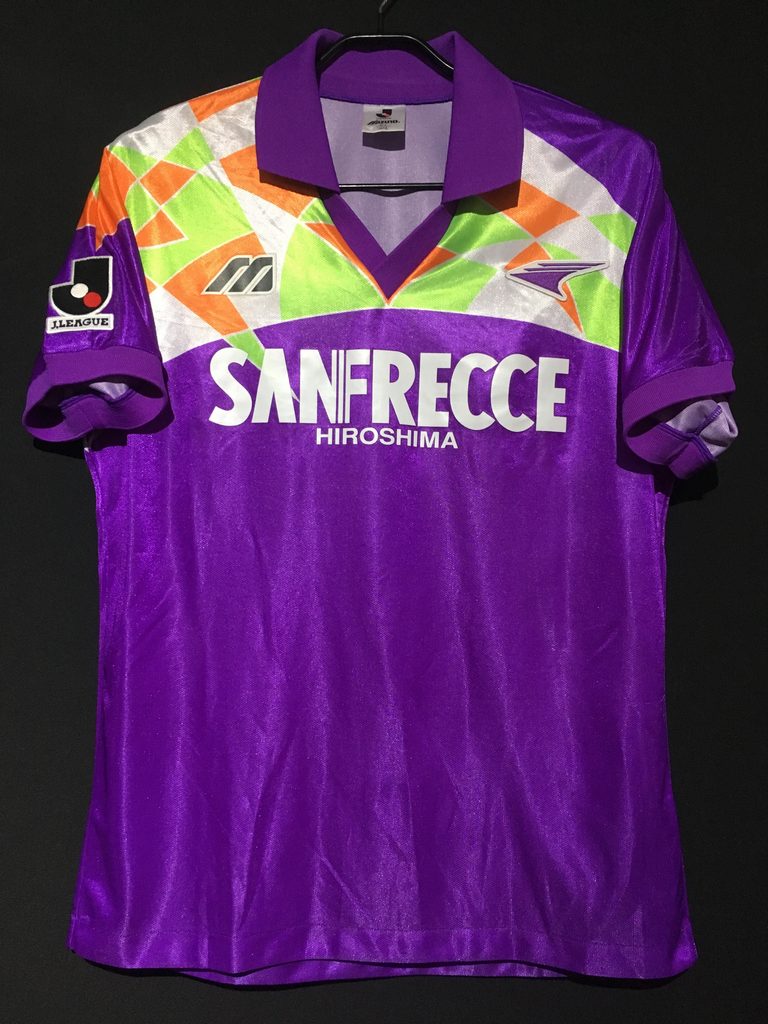
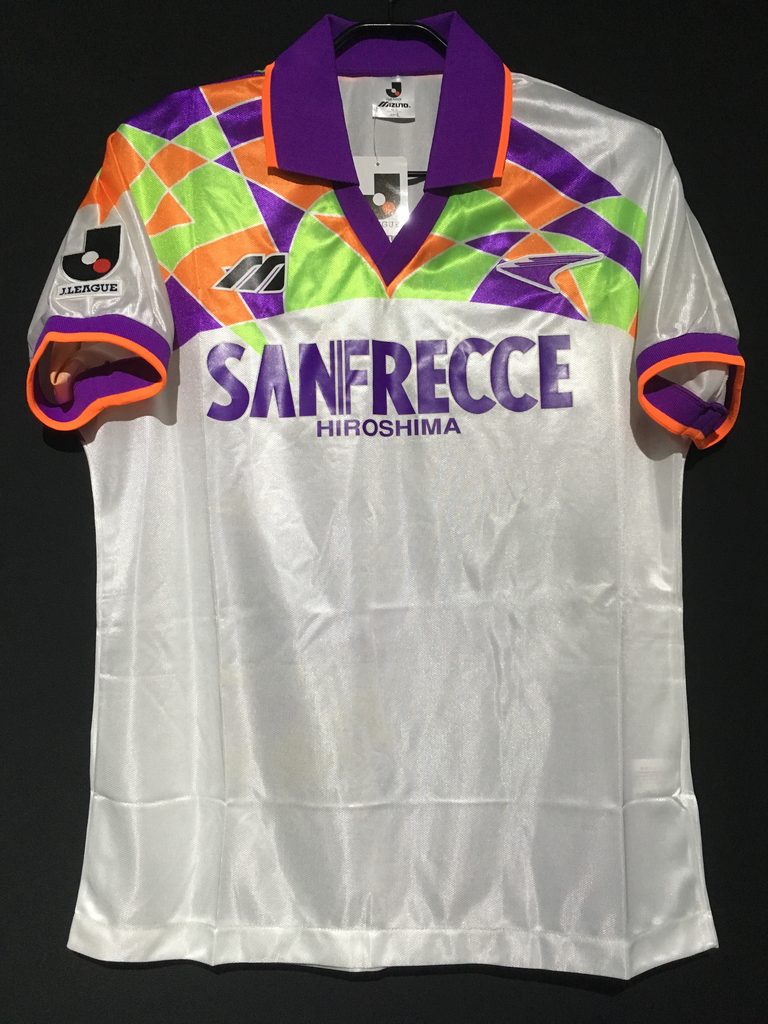
There is another interesting detail when you take a closer look at these early J.League shirts. In some cases, the chest design was different between the Player Issue worn by the players and the retail version sold to fans.
In this article, let’s take a look at the chest sponsors of the Original 10 in the inaugural 1993 season and explore some of the fascinating differences found on these historic shirts.
Chest Sponsors of the J.League’s Original 10 in 1993
First, let’s take a look at the chest markings of the ten clubs that took part in the inaugural J.League season in 1993.
| Club | Chest Marking | Company / Organization | Industry |
|---|---|---|---|
| Kashima Antlers | ANTLERS | — (Club name) | Football club |
| JEF United Ichihara | SEGA | SEGA Enterprises, Ltd. (at the time) | Games & entertainment |
| Urawa Red Diamonds | MITSUBISHI MOTORS | Mitsubishi Motors Corporation | Automotive |
| Verdy Kawasaki | Coca-Cola | The Coca-Cola Company / Coca-Cola (Japan) | Beverage manufacturing & sales |
| Yokohama Marinos | NISSAN | Nissan Motor Co., Ltd. | Automotive |
| Yokohama Flügels | ANA / SATO | All Nippon Airways (ANA) / Sato Kogyo | Airline / Construction |
| Shimizu S-Pulse | JAL | Japan Airlines | Airline |
| Nagoya Grampus Eight | NAGOYA Grampus EIGHT | — (Club name) | Football club |
| Gamba Osaka | Panasonic | Matsushita Electric Industrial Co., Ltd. (now Panasonic) | Electronics & appliances |
| Sanfrecce Hiroshima | Ford | Ford Motor Company / sponsor connected to Mazda | Automotive |
For fans familiar with the modern J.League, this list of corporate names may look particularly impressive.
SEGA, MITSUBISHI MOTORS, Coca-Cola, NISSAN, ANA, JAL, Panasonic, and Ford.
These chest sponsors show just how closely the newly established J.League was connected with some of Japan’s biggest companies.
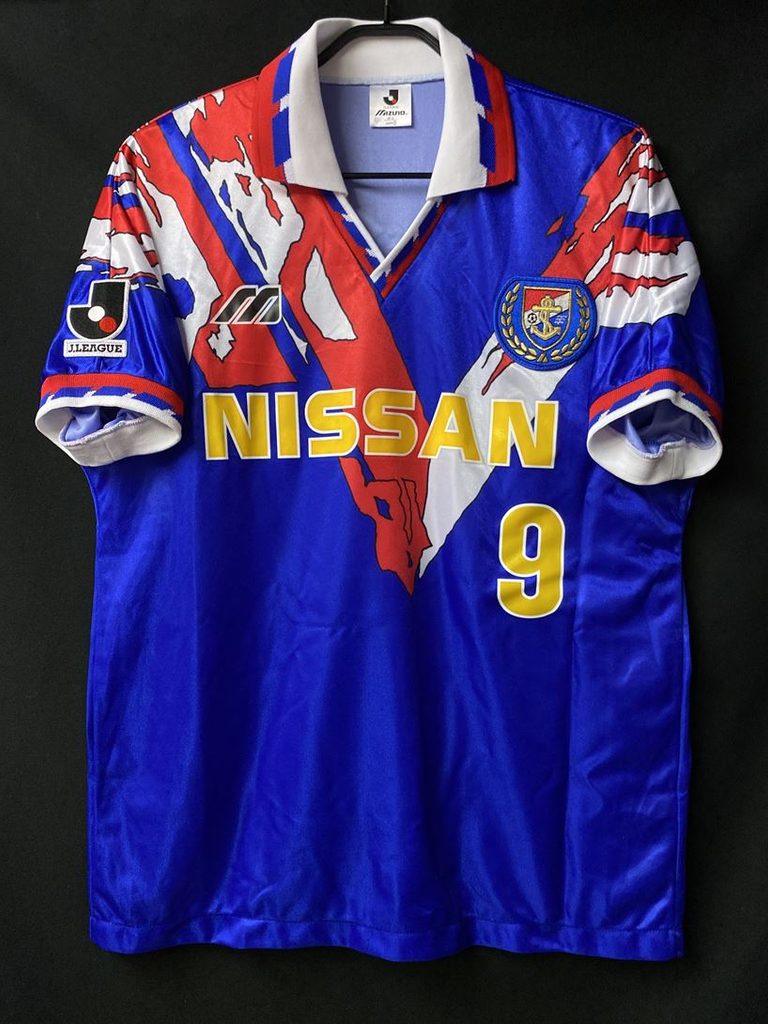
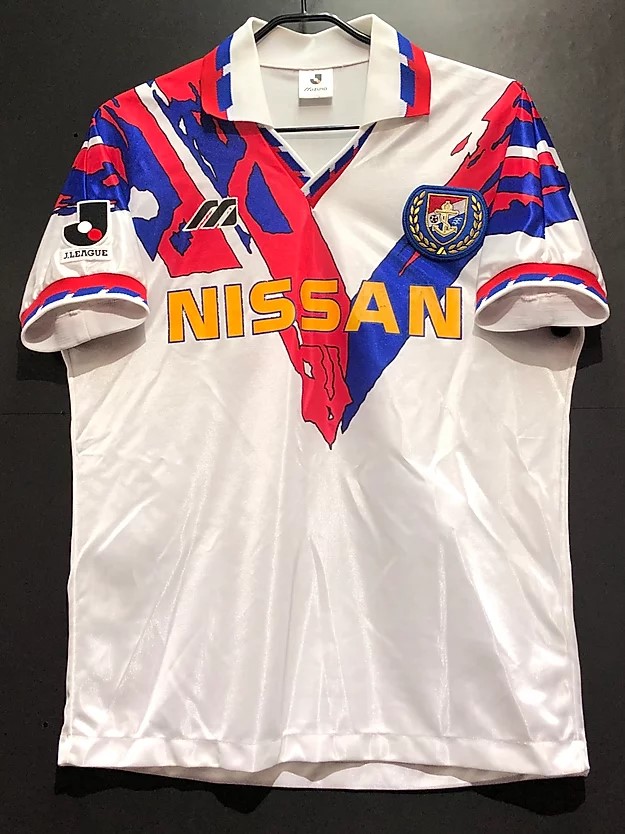
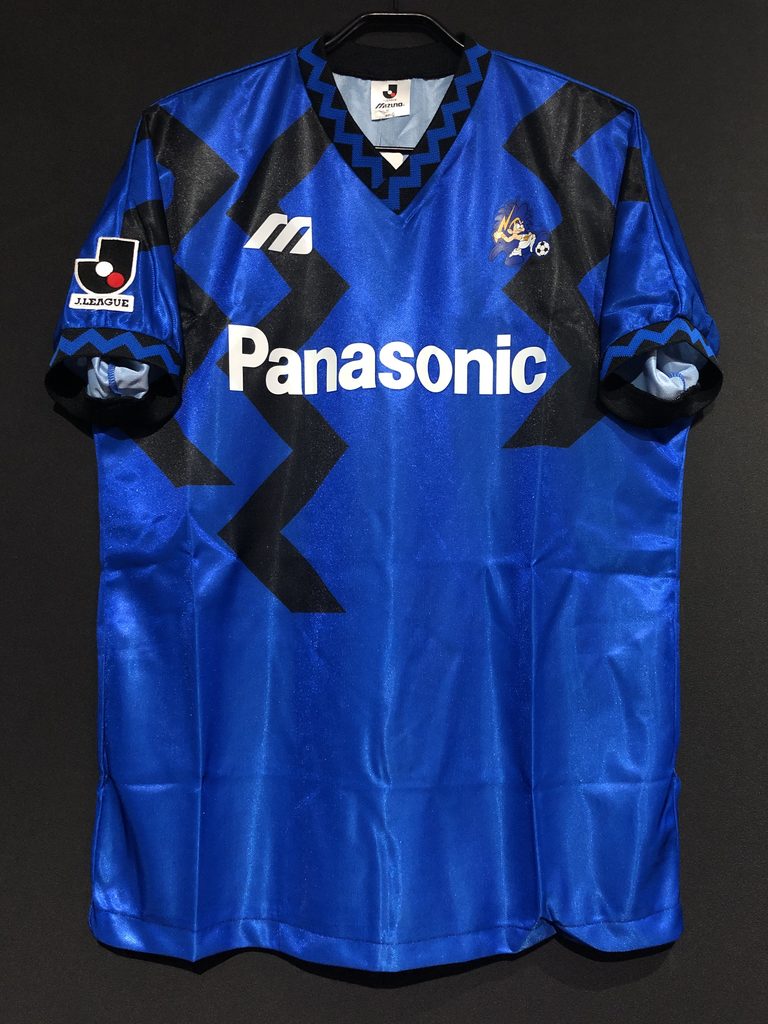
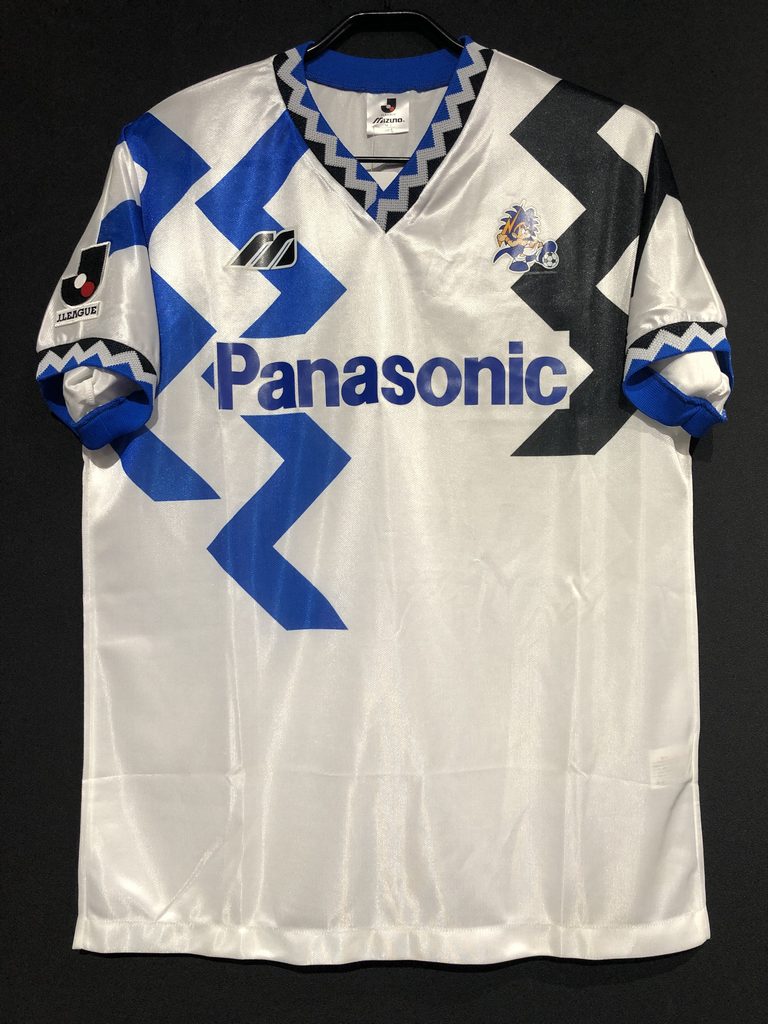
At the same time, Kashima Antlers and Nagoya Grampus Eight featured their club names on the chest rather than the names of corporate sponsors.
Why Did Kashima Use “ANTLERS” Instead of “SUMITOMO METAL”?
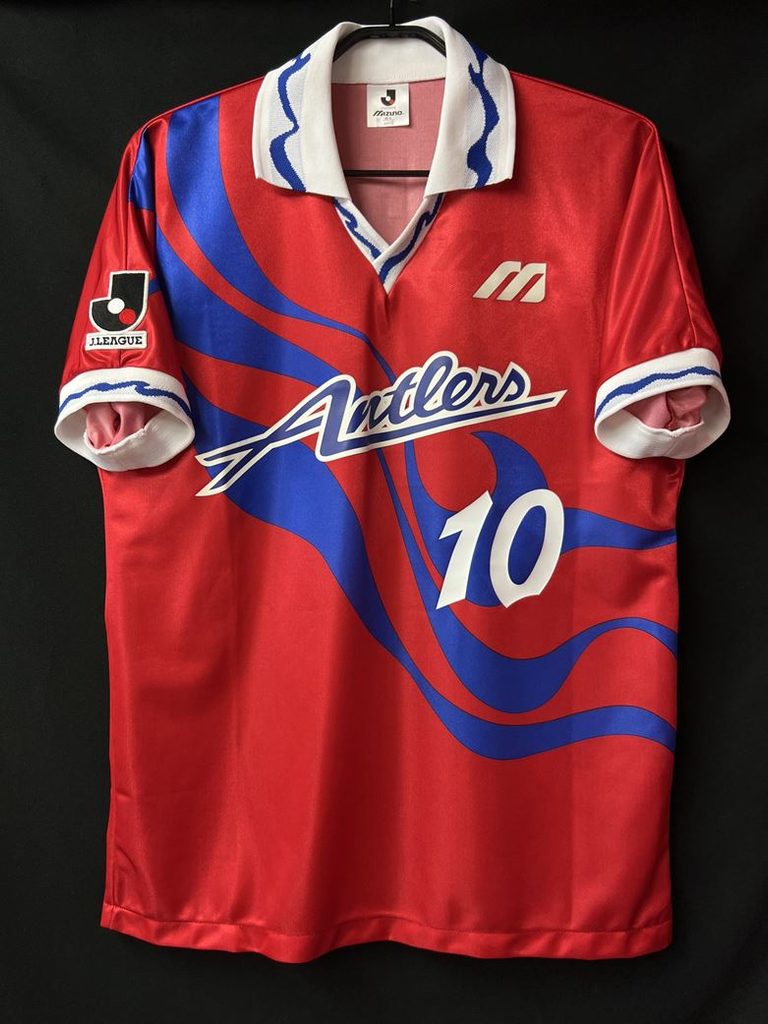
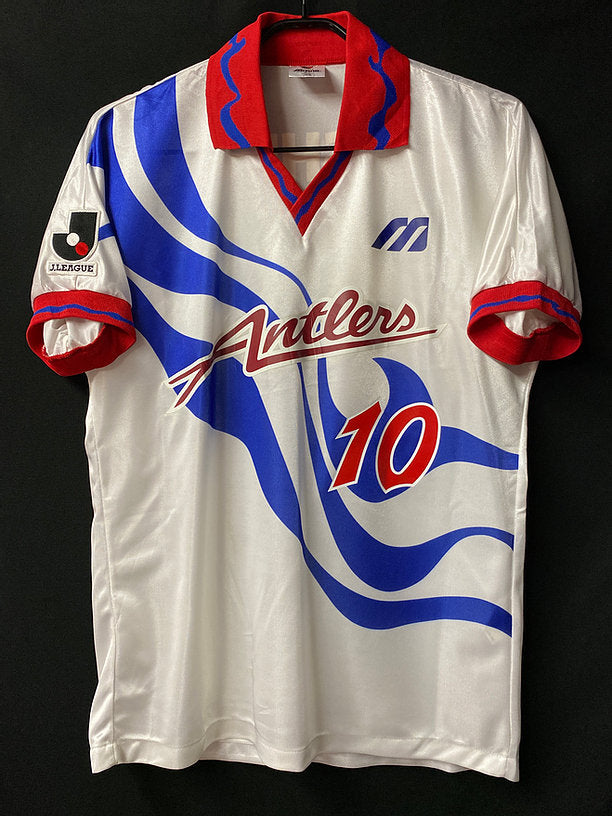
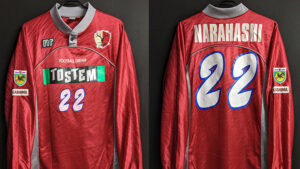
One of the most interesting features of Kashima Antlers’ 1993 shirt is the word “ANTLERS” on the chest instead of a corporate name.
Kashima Antlers was established in 1991 by five local municipalities—Kashima, Kamisu, Hasaki, Itako, and Hokota—along with 43 companies.
Sumitomo Metal Industries played a major role in the club at the time.
However, Kashima Antlers was not intended to be a club belonging solely to Sumitomo Metal. It was established as a community-based club involving local businesses, municipalities, and other stakeholders.
For that reason, instead of prominently displaying the corporate name “SUMITOMO METAL” on the chest, the club used its own name, “ANTLERS.”
This makes the shirt particularly interesting when looking at how clubs in the early days of the J.League represented their connections with the local community.
Nagoya Grampus Eight Also Featured the Club Name Instead of a Corporate Name
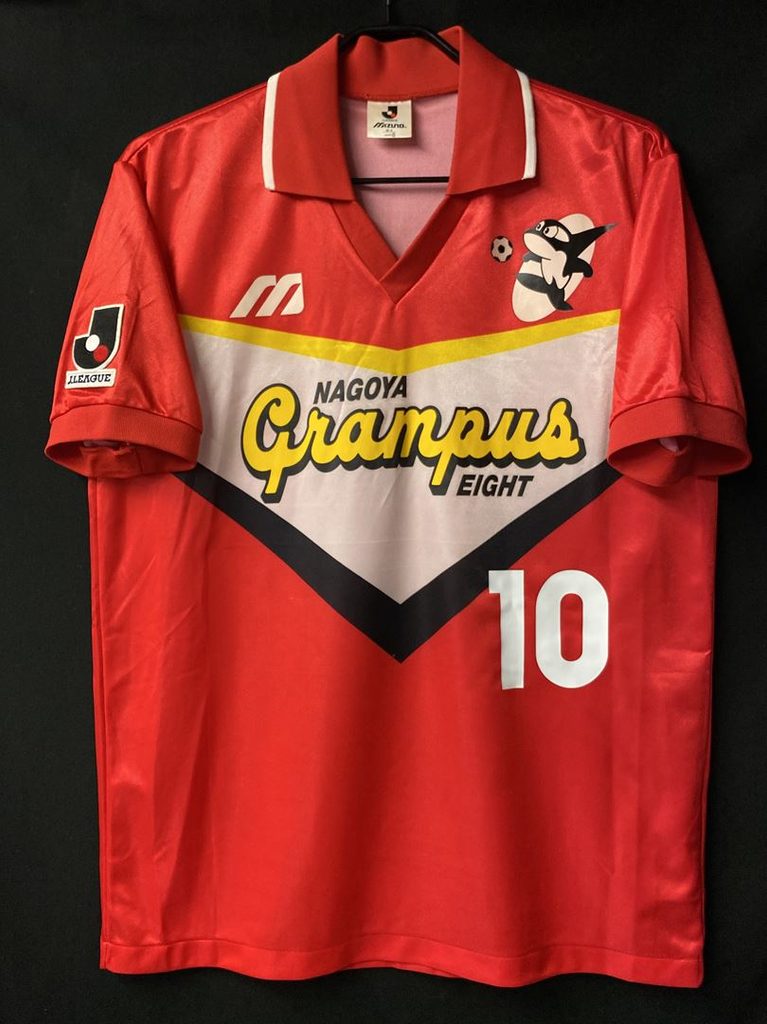
Nagoya Grampus Eight was another club that featured its own name on the chest rather than a corporate name.
Toyota Motor Corporation played a major role in Nagoya Grampus Eight.
From a modern perspective, it would not be surprising to see “TOYOTA” displayed prominently on the chest.
However, the 1993 shirt featured the club name “NAGOYA Grampus EIGHT” instead.
Toyota was initially reluctant to participate in the newly established J.League.
Following approaches from the J.League, Toyota eventually became more deeply involved with the club.
Shoichiro Toyoda, who served as the club’s first president, also supported the idea of establishing the club as a team rooted in the local community rather than putting the corporate name front and center.
As a result, the chest of the 1993 shirt displayed “NAGOYA Grampus EIGHT” rather than “TOYOTA.”
JAL on Shimizu S-Pulse: A Sponsor That Symbolized the Early J.League
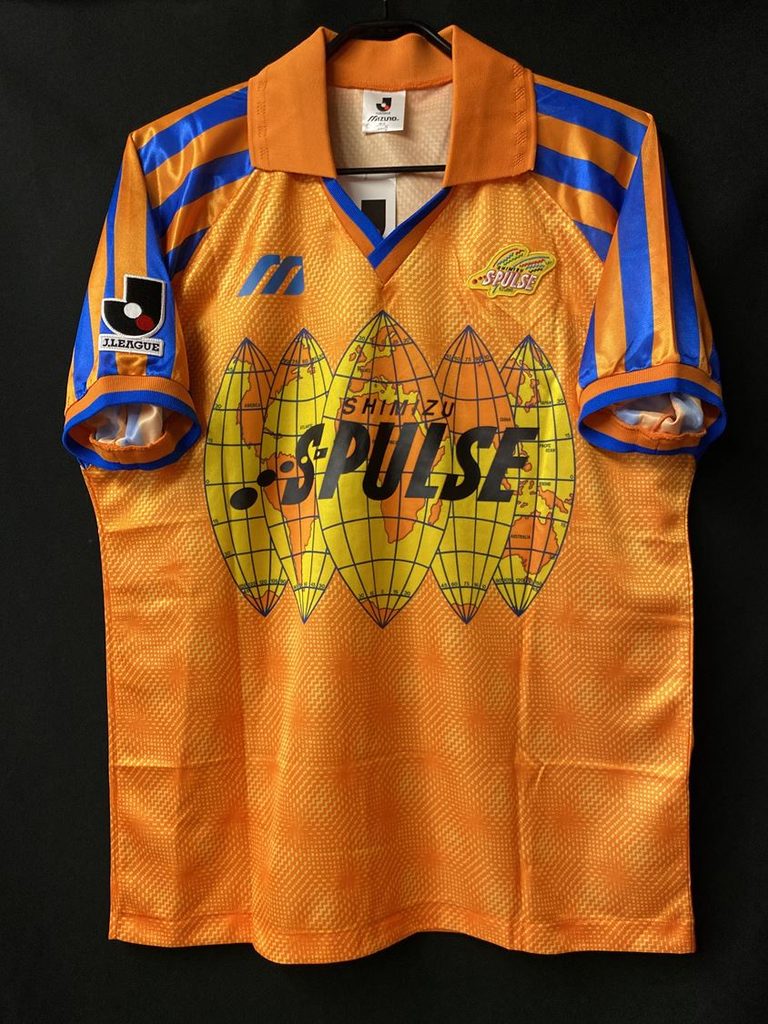
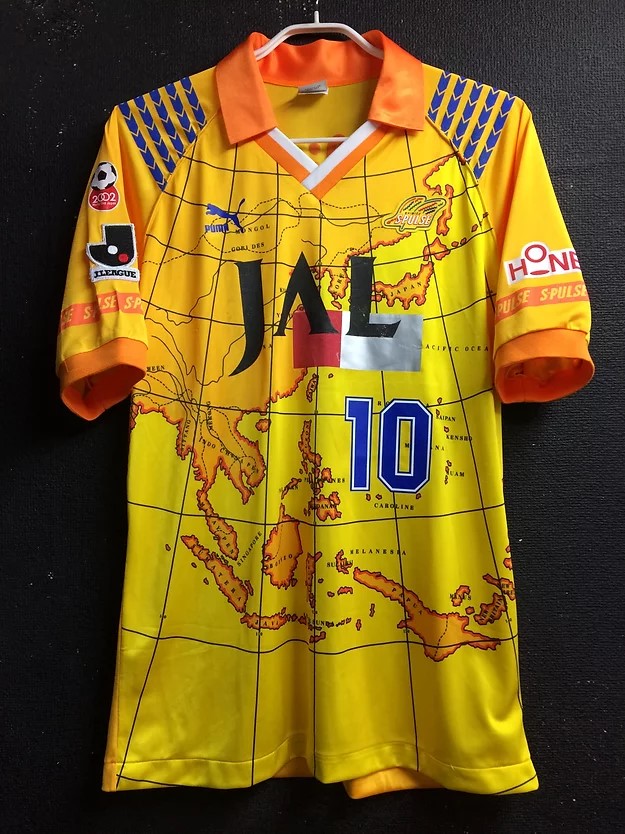
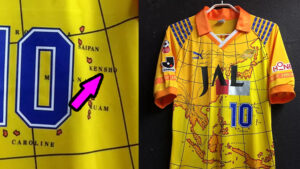
Among the Original 10 in 1993, the “JAL” logo on Shimizu S-Pulse is particularly memorable.
In fact, JAL is often described as the first uniform sponsor of a J.League club.
At the time, many J.League clubs had major corporations behind them as parent companies.
Shimizu S-Pulse, however, was not a club owned by a major corporate parent.
Japan Airlines (JAL) became a sponsor of Shimizu S-Pulse, and the relationship reportedly began when JAL’s advertising division approached the club.
By the 1980s, shirt sponsorship had already become well established in European football.
For JAL, the launch of the J.League in 1993 presented a new opportunity for sports marketing.
The “JAL” logo on the chest of Shimizu S-Pulse is therefore one of the symbols of the era when professional soccer was taking its first steps in Japan.
In Some Cases, the Player Issue and Retail Version Were Different
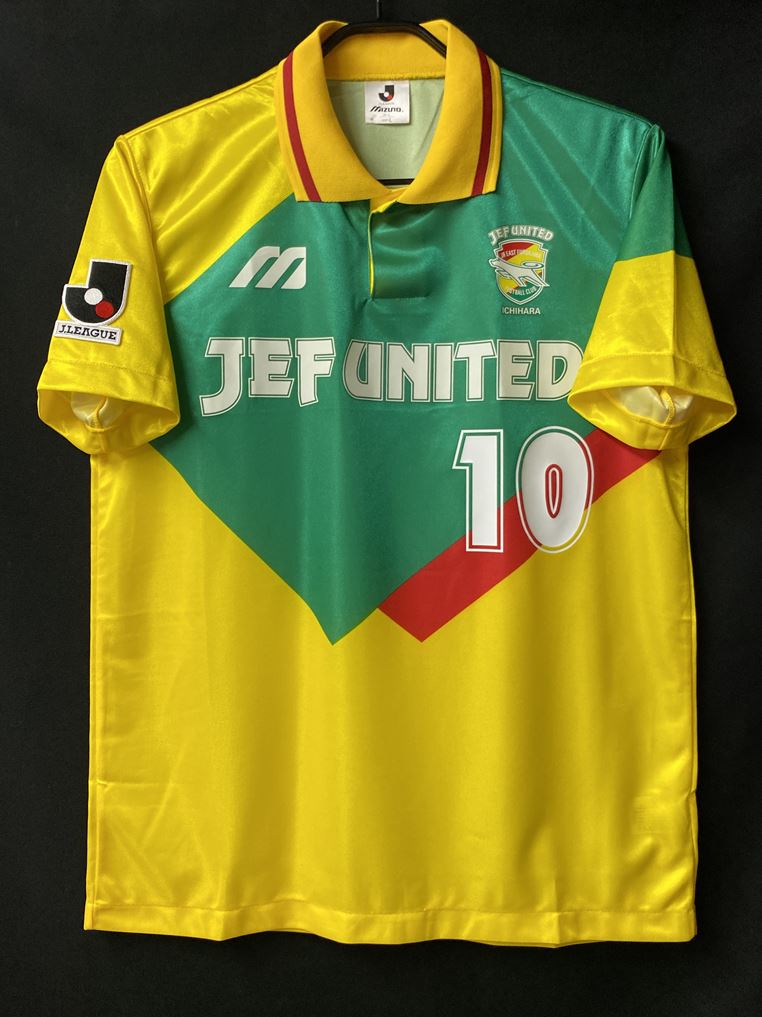
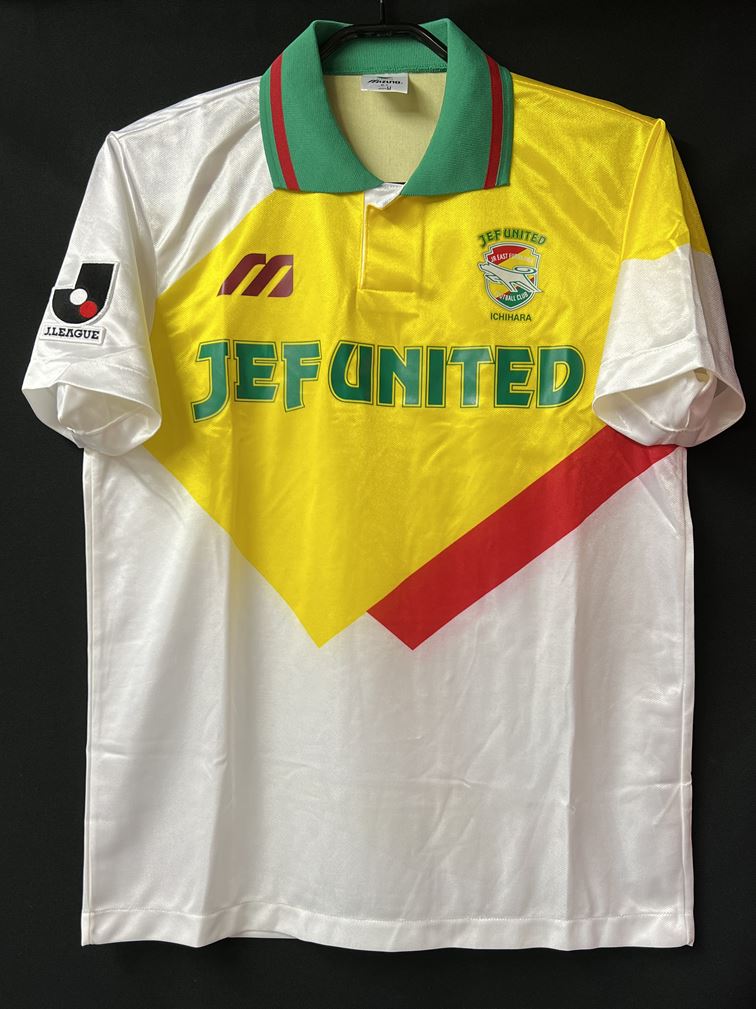
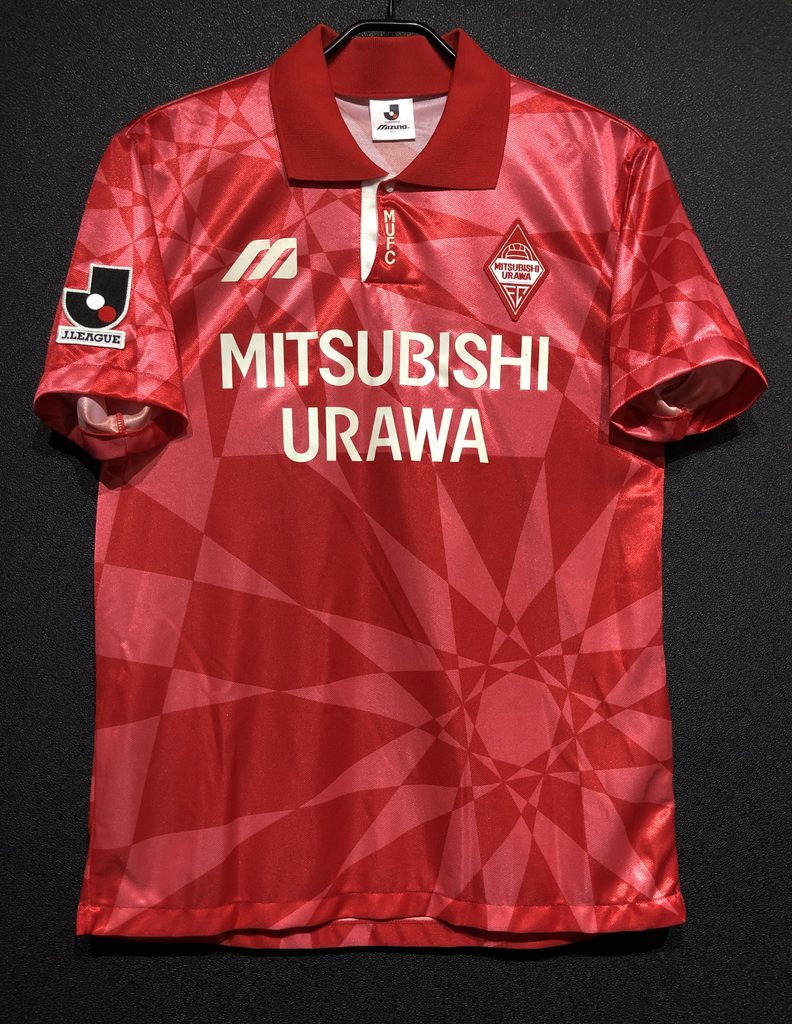
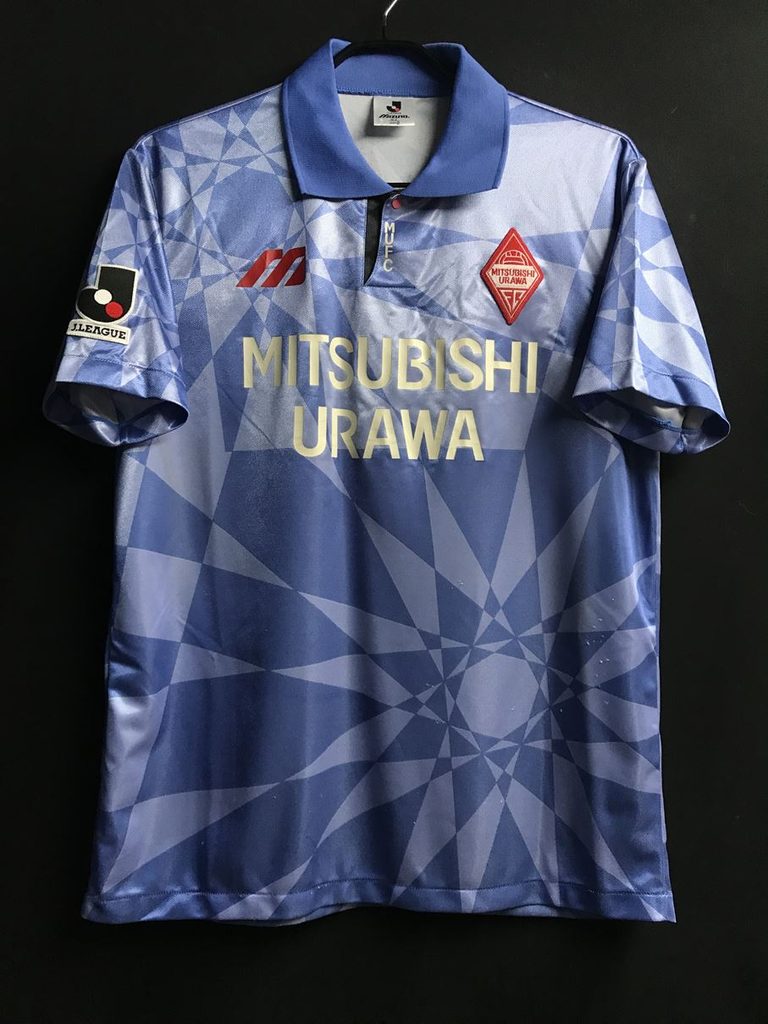
For collectors of 1993 J.League shirts, one of the most important details is the difference between the Player Issue and the Retail Version.
In some cases, the chest markings on the shirts worn by players in actual matches were different from those on the replica versions sold to fans.
Among the Original 10 in 1993, the following differences have been confirmed.
| Club | Player Issue | Retail Version |
|---|---|---|
| Verdy Kawasaki | Coca-Cola | YOMIURI |
| JEF United Ichihara | SEGA | JEF UNITED |
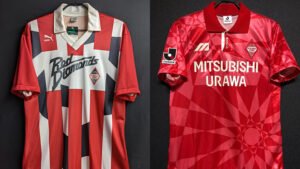
| Urawa Red Diamonds | MITSUBISHI MOTORS | MITSUBISHI URAWA |
| Yokohama Flügels | ANA / SATO | A・S FLÜGELS |
| Shimizu S-Pulse | JAL | SHIMIZU S-PULSE |
| Sanfrecce Hiroshima | Ford | SANFRECCE Hiroshima |
This difference is particularly fascinating for anyone researching 1993 J.League shirts.
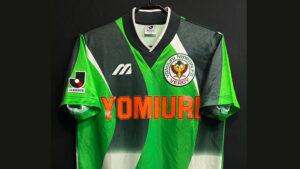
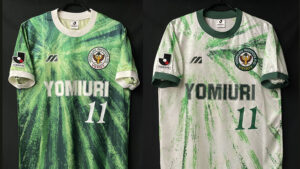
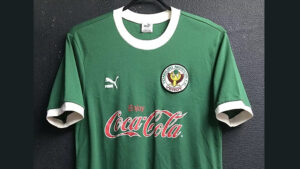
Take Verdy Kawasaki as an example. The Player Issue worn by the players featured “Coca-Cola” on the chest.
The Retail Version sold to fans, on the other hand, featured “YOMIURI.”
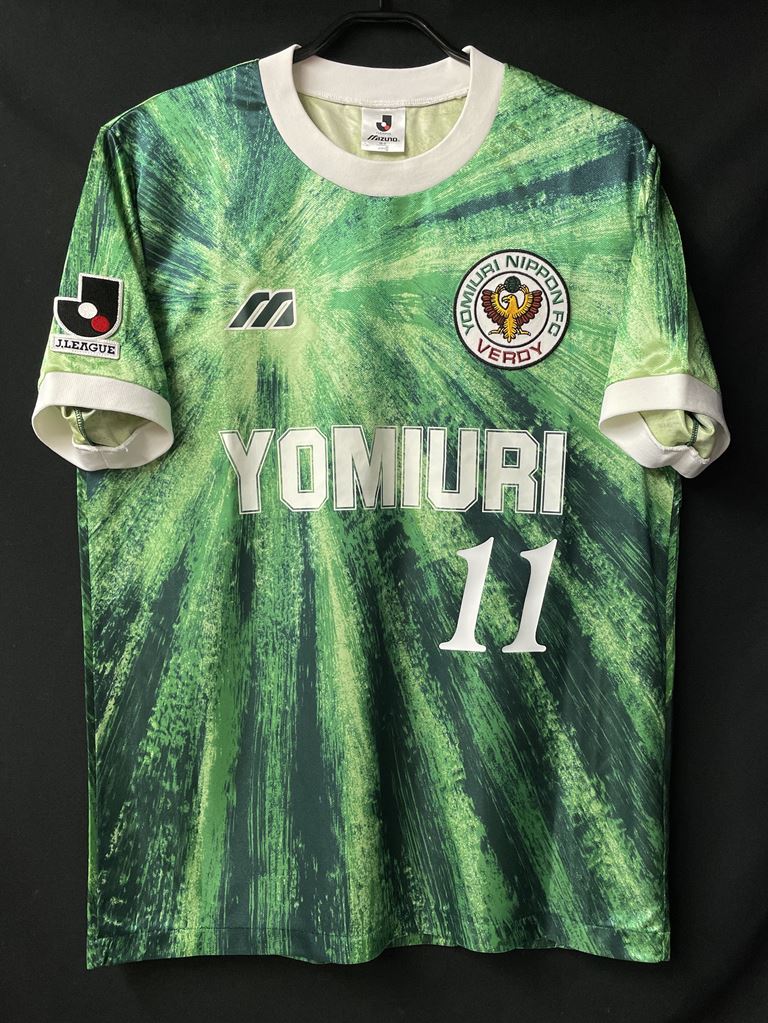
1993/94 Verdy Kawasaki(Home)
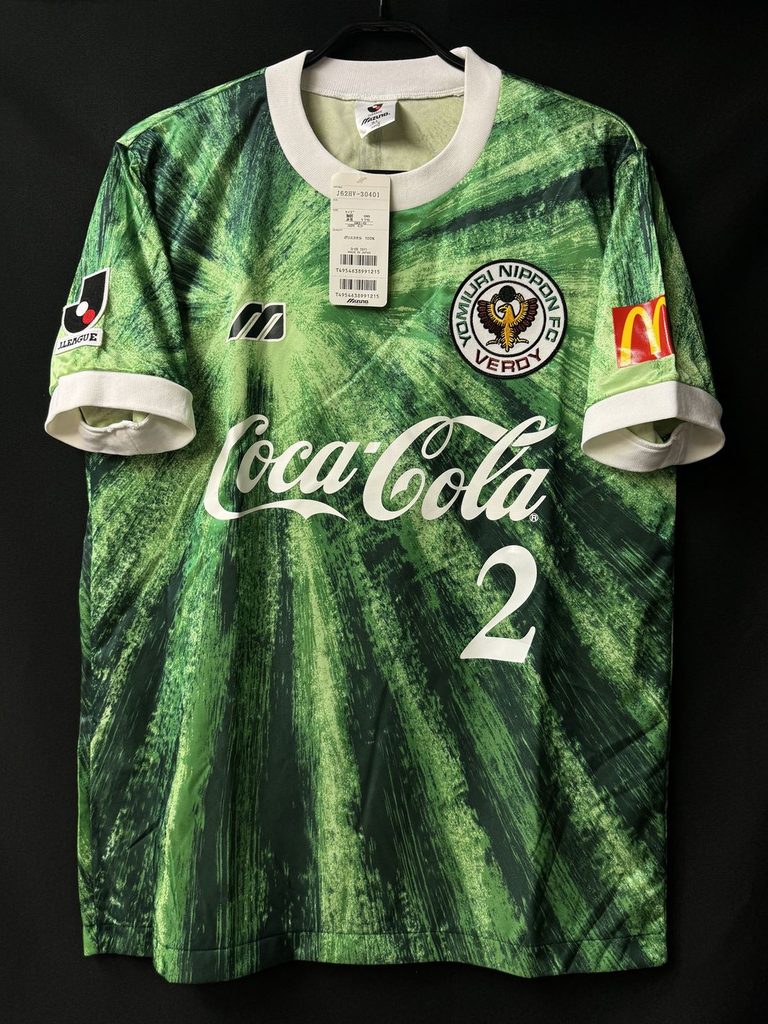
1993/94 Verdy Kawasaki(Home)
In other words, even within the same 1993 Verdy Kawasaki shirt, the chest design could be different depending on whether it was the Player Issue or the Retail Version.
This is an important detail for collectors.
Rather than simply looking for a “1993 Verdy Kawasaki shirt,” it is worth asking whether you are looking at a Player Issue or a Retail Version. Once you start looking at shirts from this perspective, you can discover multiple variations from the same season.
Why Were the Chest Markings Different Between Player Issue and Retail Versions?
So why did these differences exist?
One possible reason is that shirts worn by professional players in matches and products sold to fans were subject to different commercial and advertising considerations.
The J.League was still in its very early stages in 1993. The specifications of Player Issue and replica shirts were not necessarily organized and standardized in the same way they are today.
As a result, shirts from this period can have unique specifications and variations that are rarely seen on modern football shirts.
The 1993 Original 10 are especially interesting because the corporate backgrounds and local identities of the clubs are strongly reflected in their shirts.
Simply looking at the chest sponsors can reveal the companies and communities that were connected to the clubs during the early years of the J.League.
The Appeal of 1993 J.League Shirts Goes Beyond Their Design
When you look at 1993 J.League shirts, there is much more to discover than just their designs.
The logos on the chest each tell part of the history of their respective clubs.
“ANTLERS” on Kashima Antlers.
“NAGOYA Grampus EIGHT” on Nagoya Grampus Eight.
“Coca-Cola” on Verdy Kawasaki.
“JAL” on Shimizu S-Pulse.
And corporate names and brands that have long since disappeared from J.League shirts.
Once you start looking into the differences between Player Issue and Retail Versions as well, the first season of the J.League in 1993 begins to reveal itself through its shirts.
The Stories Behind the Shirts: The Original 10 in 1993
The shirts of the J.League’s Original 10 in 1993 have a unique appeal that sets them apart from modern shirts.
Some clubs featured the names of major corporations on their chests, while others, such as Kashima Antlers and Nagoya Grampus Eight, featured their own club names.
There were also clubs where the chest marking differed between the Player Issue and the Retail Version.
When searching for 1993 J.League shirts, don’t just look at the overall design. Pay close attention to the chest sponsor as well.
Even shirts from the same club and the same season can have completely different appearances depending on whether you are looking at a Player Issue or a Retail Version.
Discovering these small details is one of the great pleasures of collecting historic J.League shirts.